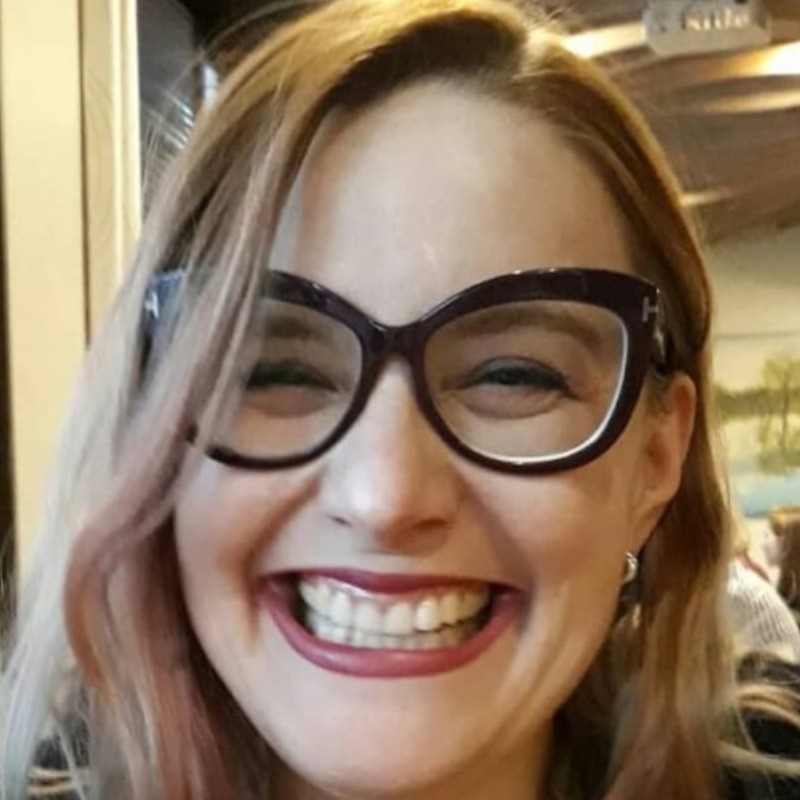
Hello, I’m Marina, a board member at OctoProctor, a historian by education, and a person who has spent 20+ years building products, systems, and occasionally breaking them to understand how they actually work. This is not a corporate opinion piece, this is my story about learning, cheating, academic integrity, fairness, and why I don’t believe education was ever meant to look the way it does today. And yes, I’ve seen it from all sides.
Probably not what you expect to hear from a historian (yes, my major was history, European integration, mid-20th century, Germany’s role, all that stuff). Dusty books and sleepless nights are tightly associated with us. But it is not what history is about. Neither assessment.
My generation (and the ones before) grew up on closed-book exams. For some reason, they’re still very much alive. And that makes me sad, because they mostly measure one thing: the ability to memorize and reproduce information under pressure. That’s not fairness in education. That’s a very narrow definition of it. I’ve never been particularly good at memorization. I’ve always been closer to Sherlock Holmes in that sense: you keep what matters, and for everything else, there are encyclopedias.

The reality is that we no longer live in a closed-book world. We live in a world where everyone has access to tools, references, and increasingly, intelligent assistants. So, the question becomes: are we preparing people for the world they will actually operate in, or for a controlled environment that no longer exists outside exam halls?
This is where conversations about online proctoring often go wrong. The goal shouldn’t be to recreate a perfect closed-book environment. It should be to support academic integrity in a world that is open by default. If you expected me to call for more exams as an OctoProctor board member, I won’t.
EdTech wasn’t a one-time decision. It’s something that has been growing on me throughout my life with a few detours and doubts.
If I go all the way back to the late 90s, when the internet was still new and slightly magical, I won a student grant to build a course for ESL professors: Hypermedia Technologies in Teaching Foreign Language. What fascinated me back then was how hypermedia worked much closer to how our brains actually function — non-linear, associative — compared to traditional textbooks. The course worked well, but I realized something important: I’m not a teacher by design. I’m more of a curious experimenter.

Even earlier, there was a children’s book, The Magic Anatomy Book by Karol Donner. I read it like a fairytale. And somehow, without realizing it, that book helped me win a school biology competition. No heavy memorization, just understanding through storytelling.
That idea stayed with me: how we learn matters as much as what we learn. Then came 20+ years in tech. Products, systems, Agile, change management, value propositions, game design, all that jazz. Too often, education felt like a system where form wins over meaning.
I’m so done with it.
It was somewhere in the early 2010s, I was working at Itransition at the time, leading the relaunch of our Microsoft partner program. One of the key requirements was to have a certain number of certified professionals. Which meant one thing: certification exams. In-person. In one of the testing centers. Proctored. Each test taker was to present two IDs. And oh my it was painful.
I remember going through all the requirements and then explaining them to our developers. I had zero doubts about their Microsoft tech skills, but I had very real concerns about the logistics. And those concerns were not theoretical. We actually had a case where an exam didn’t happen because someone forgot their second ID at home (which is absolutely natural, why on Earth do we need to ever present 2 IDs). Perfect knowledge. Bullet-proof exam integrity. Zero result.
That was my first real encounter with proctoring, and it wasn’t exactly love at first sight. Because I clearly saw how fragile an assessment system can become when logistics matter more than learning.

As our partner network grew (Microsoft, Atlassian, Salesforce, and dozens of others), the number of required certifications increased. And suddenly, sending people to test centers in other cities/countries started to look questionable. Travel time. Non-billable hours. Scheduling complexity. So we made a decision and launched our own Kryterion testing center in our company’s hometown. And I led this initiative even before its inception. Which also meant I trained our proctors;-))))) That experience changed my perspective quite a lot.
Because once you’re on the inside, you start seeing both sides, the need for integrity, and the friction it creates. You see how easily the process can become heavier than it needs to be. And how small operational details can completely derail something that should be straightforward. We had to shut the center down when COVID hit. But by then, the idea was already planted, that proctoring is necessary, but the way we implement it makes all the difference. And, apparently, that story didn’t end there;-))))
Experiential learning never fits into a 2D box where digging can go only one way. It’s very hard to ignore how non-linear problems are once you see it. Proctoring, interestingly, became that entry point for me. It sits right at the intersection of trust, technology, and fairness. And yes, it’s often misunderstood as a punishment.
I was born and raised in Siberia, which is also often misunderstood. Oh, how I love the image of a snowy wasteland ruled by polar bears and their bearded men counterparts. And vodka, a lot of, of course;-)))

In reality, I was quite privileged: my hometown is often called the Siberian Athens because of the number and quality of its universities. I didn’t have to leave home, cut ties, and move into the unknown just to get a higher education diploma, like my mother did.

That already shaped my understanding of access. I’m also older than Google;-))), so when I was studying, distance learning was more of a concept than a reality. But again, I was lucky. I had opportunities to study abroad, at Mansfield College, Oxford, and Université Libre de Bruxelles (both were waaaay closer than Penn State;-))). Ah yes, I declined admission to Penn State University's PhD program because I was too scared to go to literally the other side of our planet.
I clearly saw that access often depends on circumstances you don’t control, geography, timing, resources, pure luck, you name it.
And sometimes, the access is gated by douchebags. During one of my exams, I was offered to “move the exam to a more intimate setting” with a clear implication that the outcome (=my grade) would be more favorable. I was strong enough to decline (and I am still proud of this rebellious teenager I used to be), But not everyone is in a position where they feel they can. And that’s exactly why I believe systems matter. Because without structure, transparency, and accountability, situations can arise where fairness becomes negotiable.
So for me, proctoring is not just about preventing cheating, it’s also about protecting people. Sometimes from each other. Sometimes from the system itself. And that’s where online proctoring for digital assessment starts to matter: not as control, but as a way to make fairness visible and enforceable.
A high-achieving, C-level woman in a male-dominated industry. I know you have that itch to ask about cheating.
Yes, I have, and I’m speaking about cheating in a broader, not academic sense. I also feel that I absolutely need to use this platform to apologize — broadly and retrospectively — to a few of my exes who probably didn’t deserve that experience (well, even if they did;-)). Yes, I’m disturbingly honest ;-)

I was quite young back then, and it took me much longer to understand — probably well into my 30s — that cheating is rarely the root problem, it’s a symptom. When something is misaligned, when expectations are unclear, when needs are not met or not even articulated, people don’t suddenly become “bad.” They start looking for ways around the system they are in.
And relationships, in that sense, are not so different from systems. If all parties explicitly agree on a different structure — say, a polyamorous one — then it’s not cheating. It’s a different set of rules, clearly defined and accepted. But when you believe you’re in a monogamous setup and suddenly find yourself emotionally or otherwise involved elsewhere, that’s a signal. And that realization stayed with me.
Because the same pattern appears everywhere, including education. When people cheat, whether in relationships or exams, it’s often less about breaking rules for the sake of it, and more about something in the system not working as intended. Which, in my experience, is always a more interesting place to look.
My aim is not to suffocate EdTech or test takers. If I had to put it simply, my mission is to make learning and evaluation actually meaningful. And probably a bit more punk.
A big part of my 20 years in software industry was seeing patterns – where things work, and more importantly, where they fail. In education and assessment, one of those patterns is this gap between what we say we measure and what we actually measure.
Now, when I look at how online education is evolving — from full programs to microlearning and alternative pathways — I feel genuinely optimistic. My son is growing up in a world where physical borders and location matter much less when it comes to learning. That, to me, is what accessible education really means. Not just availability in theory, but real, practical ability to learn, regardless of where you are or what your starting point is.
This is where human-centric EdTech comes into play.

My focus now is on building digital assessment systems that are human-centric by design, systems that support learning instead of punishing it, that are transparent in how decisions are made, and that don’t rely on blind control to maintain trust. Because trust built on opacity is fragile. And trust built on clarity scales.
If we talk about the future of education, it’s not about more control. It’s about better-designed systems, ones that align incentives, reduce friction, and make fairness part of the infrastructure, not an afterthought. Education shouldn’t just prepare people to pass exams. It should prepare them to navigate a world that keeps changing.
We’re not fully there yet. There’s still a lot to improve, in infrastructure, in inclusivity, in how systems are designed. But for the first time, it feels less like an aspiration and more like an achievable direction. And that’s worth working for.
I wouldn’t say online proctoring would have dramatically changed my career trajectory if it had existed 25 years ago. The world was very different, not only tech-wise. The glass ceiling was positioned much lower. It doesn’t mean an impartial observer wouldn’t change things for women just starting out, especially in STEM.
Leadership is not a title. Proctoring is not a magic wand but a tool you can strategically use to benefit yourself and your teams. That’s how I would like you to view it.
One thing I see quite often in my female fellows is this hesitation, the feeling that you need to be perfectly prepared, fully qualified, and absolutely certain before acting. The reality is, that moment never comes. Leadership is not about having all the answers, it’s about being able to move forward without them.
Also, girls, be visible. Be loud. Be aggressive. For centuries, women have been taught to be patient, to wait, to support, and not to take too much space. I think we’ve had enough of that. Speak up. Be present. Don’t let yourself be interrupted (and if you are, take the word back). Your voice is not a side note.

Support other women and girls. Not in theory, in practice. Amplify voices. Back each other up in meetings. Recommend, refer, defend.
That’s the kind of sisterhood that does not rely on proctoring to survive. And we walked a huge mile since I was just starting. Keep your torch steady and light the way for others as they begin to navigate.
By this point the two of us can agree that I’m a rebel by nature, but a very well-educated and experienced one ;-)))
And both history and my own experience have taught me something important: rebellions are great for “lancing a boil.” They create movement, they expose problems, they break stagnation. But real, lasting change usually comes from reforms. Slow, sometimes boring, continuous work. Not very Instagrammable, but extremely effective. So I’d say I’m a rebel who learned to operate as a reformer.

Returning to decision-making in an industry as sensitive as EdTech, I don’t experience it as a psychological burden in the dramatic sense. Difficult decisions are part of my job and my life. What my experience has taught me is that making a wrong decision is almost always better than making no decision at all. Because from a wrong decision, you learn, you adjust, you move. From indecision, you get nothing. Just time lost and opportunities missed. So I put a lot of effort into avoiding that limbo.
Of course, there is responsibility, especially in a space like proctoring, where decisions directly affect trust, fairness, and people’s experiences. But for me, that responsibility is not paralyzing; it’s grounding, it forces clarity. And in a way, that’s the part I actually enjoy.
I said what I said :-))) Perception is a very interesting thing. Yes, the largest end-user group can perceive me as the anti-hero. There’s nothing that cannot be reframed in this world.
Is it easy? Absolutely not. It’s somewhere between hard and mission impossible. But I’ve always had a soft spot for impossible things, and I’m lucky to work with a team that shares the same attitude. Together, we can move mountains, I’m 100% sure;-)))
Also, if we borrow from pop culture for a second, many villains turn out to be far less villainous when you look closer. Take Loki (oh, I love him!), for example. Started as the antagonist, ended up as one of the most complex — and to me, most loved — characters.
Perspective matters. And in our case, a lot of the anti-hero perception comes from misunderstanding intent. If proctoring in education is seen as surveillance or control, of course, it won’t be loved. But when it’s understood as a tool for fair and secure assessment, for protecting trust in online exams, and for making outcomes more transparent, the narrative starts to shift.
Plus, let’s be honest — anti-heroes do tend to be more interesting;-))) So yes, I’m okay with that role. Especially when, over time, we can help people see that we’re not really the villain in the story.
What’s an absolute villain anyway? I am absolutely curious to hear your thoughts;-)))


From DIY systems and Linux to creating OctoProctor, secure assessment integrity software that handles 1m+ exams a year – Anton Skshidlevsky invites you to join a journey in time, programming, and academic rigor of EdTech founder.