For many students, the idea of a proctored university entrance test can feel completely new. Unlike the usual in-person exams, online proctored tests rely on technology, clear rules, and a structured setup to keep everything fair. Students who haven’t experienced this format before may simply be unfamiliar with the process — setting up their computer, navigating the exam software, managing their time, and handling stress. Even typically strong test-takers can feel anxious or uncertain if they aren’t fully prepared.
A recent study of higher-education students found that 45.4% reported increased stress during online proctored assessments, particularly due to technical concerns and worries about behaviors being flagged. While this data is older, the pattern is still relevant.
As shown in a research titled “Stress by Design? The Influence of Online Exam Interfaces on Student Anxiety,” about one-third of students report anxiety before and during online exams. Familiarity with the exam platform helps reduce this stress. Similarly, the study about “Students’ perceptions of different assessment modes and student experience” found that students worry about technology issues, feelings of isolation, and question difficulty. These findings show that preparation and guidance remain essential for today’s cohorts.

When students know what to expect during a proctored college entrance exam and understand how the process works, it becomes far less intimidating — and the entire testing experience runs more smoothly.
So, how can institutions support applicants with online entrance exam preparation to help them feel confident, ready, and set up for success?
Preparing applicants for a university entrance exam requires more than simply scheduling the test. It’s an opportunity for institutions to demonstrate fairness, transparency, and genuine care for candidates’ well-being. When schools offer clear admission test preparation tips, they help applicants feel supported, reduce stress.
Proactive preparation also strengthens an institution’s humane image, boosts student satisfaction, and supports public confidence in the fairness and accountability of university and college admissions. Research by Marano et al. (2024) shows that technological issues, perceived unfairness concerns, and examinee stress are the main challenges associated with remote proctoring. Another recent study found that when students are comfortable with the exam software and receive guidance from teachers, their test anxiety drops significantly.
Helping applicants feel ready improves fairness, confidence, and overall performance. But that preparation can fall short if the proctoring platform doesn’t work as it should. OctoProctor has your back! We provide secure, reliable, and scalable proctoring solutions for entrance exams.
Here’s what can make exam prep smoother for students:
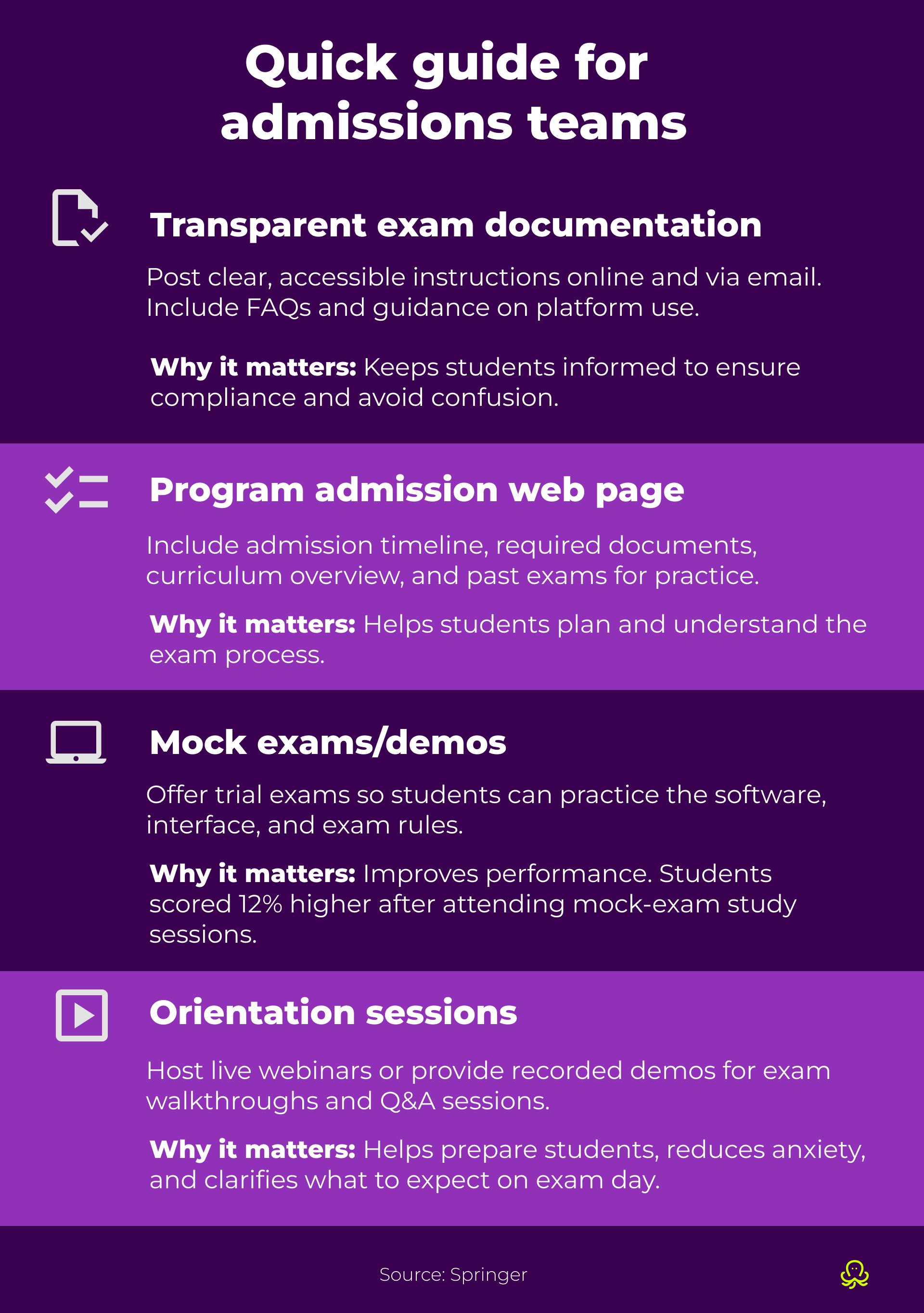
Start by preparing clear, easy-to-understand materials that follow exam documentation best practices. Make them available in all essential places: the website, the candidate portal, and direct email links sent to applicants. Keep the language simple and add an FAQ section — students often have questions about proctored entrance exams, and accessible documentation ensures they know what to expect, which rules apply, and what technology they need.
A well-organized admission page helps applicants quickly find all the information they need. It should include:
Mock exams for university admissions allow students to try out the system before the real test. They can check their device, explore the interface, and understand how the proctored environment works.
A single practice attempt can greatly improve readiness and reduce exam-day stress. Research and practical experience show that mock exams help students assess their preparedness, manage timing, and identify areas they need to improve, all while helping institutions detect system or setup issues early.
Hosting a student exam orientation gives applicants a chance to ask questions, see how the test works, and understand the rules clearly. These sessions can be live webinars, short Q&A sessions, or recorded walkthroughs that demonstrate the online testing platforms for universities and technical requirements. Orientation helps students feel more confident, reduces confusion, and supports smoother exam-day experiences.
Facing a university entrance exam can feel like a lot — so many rules, so much to remember, and sometimes even a little scary. It’s completely normal to feel nervous or unsure before entrance exams, but knowing what to expect during a proctored college entrance exam can make the whole process easier to handle.
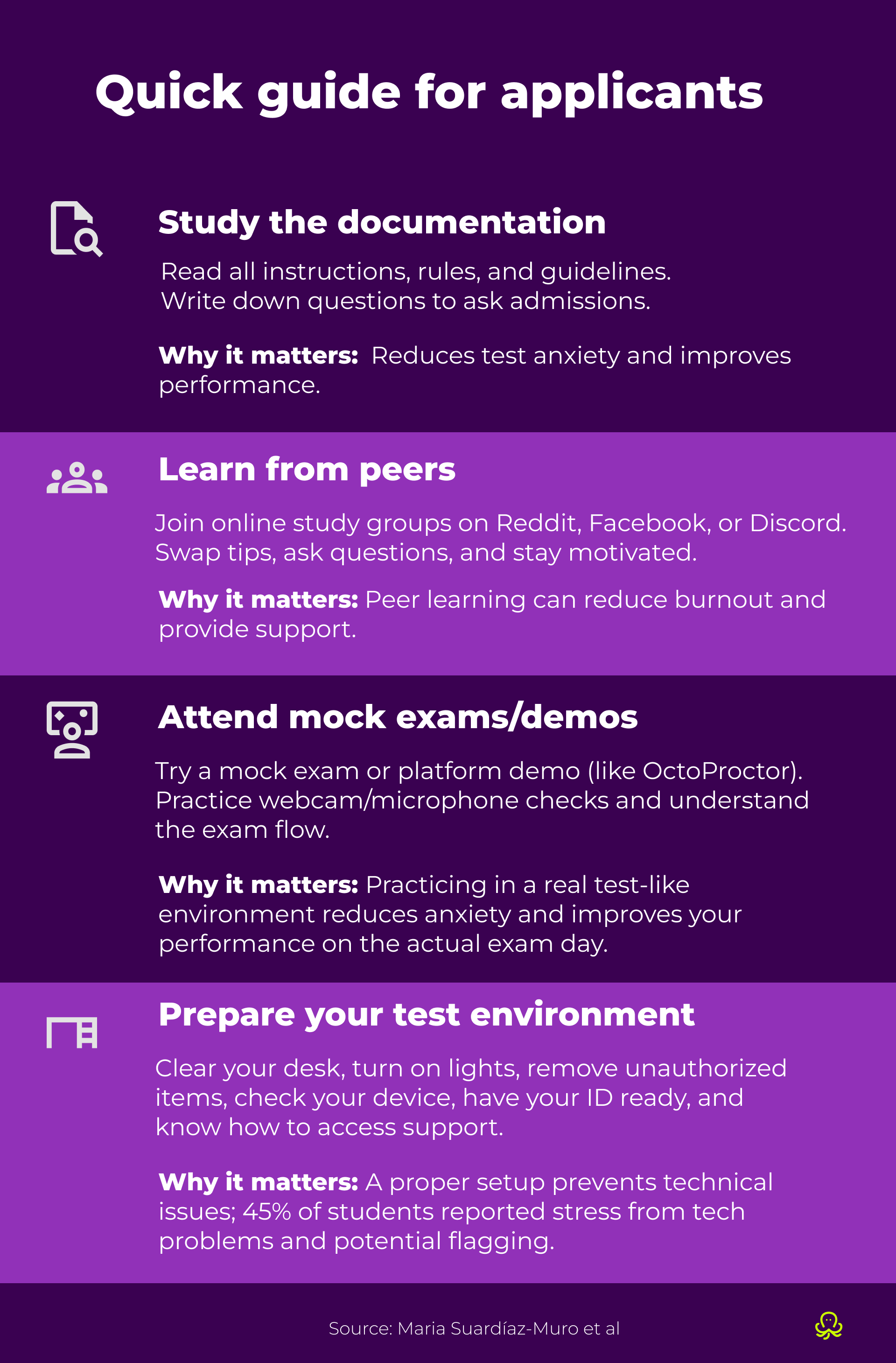
Start by going through every document your chosen university provides. Take the time to read the instructions, guidelines, and exam rules carefully. While reviewing them, write down any questions that come to mind. Some questions you’ll answer yourself as you read further, and the rest will form a useful list you can bring to the admissions team or ask during orientation sessions.
This gives you a clearer picture of what to expect, making the university entry exam feel far less mysterious.
Research shows that structured preparation (such as thoroughly reviewing exam instructions and materials) can lower test anxiety and improve performance. In one NCBI study, public health students who followed a structured study plan felt less anxious and scored higher than those who didn’t.
Look at what past applicants are saying online. You may find helpful tips, learn what to expect, and even connect with people who might become future classmates. Platforms like Reddit, Facebook, and Discord host active study groups where students preparing for university entrance exams share experiences, ask questions, and support each other.
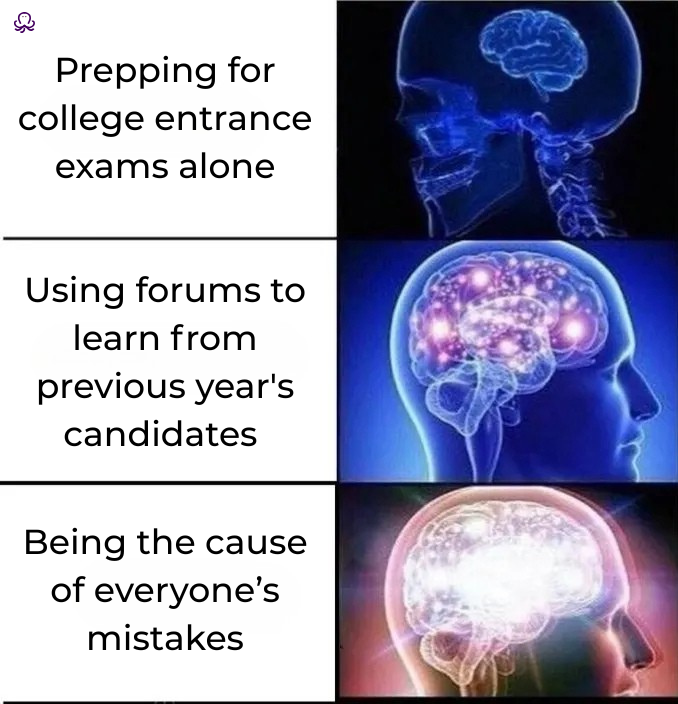
Joining these groups helps you exchange advice, stay motivated, and catch details you might overlook on your own. Research supports this: A recent study in Frontiers in Psychology found that online peer groups reduce stress and boost confidence. Another study by Gómez, Jiménez & Moreira et al. (2024) showed that students who learned alongside peers experienced less burnout and felt more supported throughout their studies.
If your chosen university offers a mock proctored exam, make sure to take it. And if they don’t, check whether the proctoring vendor provides a demo — many do, including us through our OctoProctor test demo, where students can try the software in advance. Not all institutions have the resources to run full practice exams, so having access to a vendor demo can be a huge relief for applicants.
Testing the system beforehand helps you see exactly how the proctoring software works, confirm that it runs smoothly on your device, and understand what the online exam flow feels like. You’ll also get familiar with basic checks, such as webcam and microphone setup, which reduces uncertainty and helps calm pre-exam stress.
According to The Global College, mock exams “act as a buffer” by giving students a safe space to practice, reducing stress, and making them feel more confident before the real test.
Additional practical tips for success during online proctored exams:
Importantly, some platforms, such as OctoProctor, offer non-invasive proctoring. Our ID checks do not use biometrics, so you can focus on the exam without extra stress. A little preparation goes a long way in easing nerves and ensuring your exam runs smoothly.
Preparing for an entrance exam isn’t only about studying — it’s also about taking care of your mind and body. Eat well, get enough sleep, and keep a routine that feels realistic for you. Take breaks, do activities that help you relax, and make sure to request any necessary accommodations well in advance. Following these tips for stress management before college entrance tests prevents memory lapses, keeps you focused, and makes exam day much more manageable.
Research supports this: Maria Suardíaz-Muro et al. found that lack of sleep has a clear negative impact on academic performance during exam periods. In the same study, 61.3% of students believed their performance would improve if they simply slept more.
Entrance exams often feel like life-changing moments for applicants, which is why institutions must strive to make the process as humane, clear, and supportive as possible. Providing online test orientation sessions, accessible documentation, and guidance on admission forms shows students that the university admission process is designed to set them up for success, not to catch them off guard.
For applicants, following a structured candidate preparation checklist and knowing what to expect during a proctored college entrance exam can make the experience far less intimidating. It’s natural to compare yourself to others, but remember: their performance is outside your control. What is within your control is preparing well, creating a calm environment, and approaching the exam with confidence.
At OctoProctor, we help institutions deliver secure, fair, and student-friendly entrance exams. Our proctoring approach minimizes stress, protects candidate privacy, and ensures that every applicant has an equal opportunity to show what they know. Explore our proctoring policies and best practices for EU undergraduate admissions to see how we support both institutions and candidates.
With strong admission test preparation and a bit of mental readiness, the entire entrance exam process becomes more manageable. Students feel more confident, and institutions maintain fairness and smooth operations. 🐙
Ensure a smooth, secure, and supportive experience for every student with our live proctoring platform. If you’re looking to improve fairness in university admissions, OctoProctor helps institutions administer exams with integrity while creating a more humane testing experience for students.
Talk to us!A university entrance exam, or college entrance test, is a standardized assessment that schools use to determine whether a student is prepared for their academic programs. It typically evaluates skills in subjects like math, reading, writing, science, or logical reasoning, depending on the institution. Think of it as a way for the school to understand your academic strengths and readiness before you begin your course.
Being admitted means the college has reviewed your application and officially offers you a place in the program. Many people use “admitted” and “accepted” interchangeably, but there is a small difference: Usually, you’re admitted when the college offers you a spot, and you’re accepted once you officially accept their offer, usually by confirming your place and sometimes paying a deposit. In short: admitted = they want you; accepted = you’re going.
Most colleges have an online application or candidate portal where you can create an account, fill out the admission form, upload required documents, pay the application fee (if any), and submit your application. Be sure to follow the instructions carefully, check deadlines, and review all information before hitting submit. Some institutions also send email confirmations and updates through your portal.
A college application usually includes:
Online applications guide you step by step, helping you see which sections are complete, which are pending, and what still needs to be uploaded.


What’s no longer working in US undergrad admissions and where performative, AI-tinged essays and generic test scores fall short? The “local era” demands its correctives, and owning entrance exams can be the case for your institution.