Live proctoring is ideal for high-stakes or complex online exams that require real-time human judgment. Trained proctors monitor, guide, and intervene to make sure every test taker has a fair shot and the help they need. With OctoProctor’s platform, institutions can conduct live invigilation securely, efficiently, and ethically.
There are many ways to monitor online exams, from fully automated systems to hybrid setups, and one of the most specialized options is live proctoring. Each method has its own strengths, and choosing the right one depends on several different factors. That includes the type of assessment, its stakes, and the experience you want to create for test takers.
Live online exam monitoring stands out because it places trained human proctors at the heart of the process. According to Market Growth Reports, it was the most widely used proctoring method (44%) for high-stakes online assessments two years ago, such as government and professional board exams.
But live proctoring is not always necessary or practical, yet in certain situations, it can make a significant difference. Knowing how and when to use live proctoring helps institutions maintain fairness, support learners, and uphold the credibility of their exams.
We’ll start with the basics: what live proctoring is. This will lay the foundation for understanding its role and responsibilities before exploring the situations where it truly adds value.
It is a live online exam monitoring method where trained human proctors supervise test takers in real time. Unlike fully automated systems, live proctoring relies fully on human judgment. In-house proctors watch exams as they happen and make decisions based on what they see and hear. When necessary, they can also interact directly with candidates right away.
Real-time proctoring rose in popularity during the COVID-19 pandemic, as schools and certification bodies adopted digital platforms to conduct online tests, according to Research and Markets.
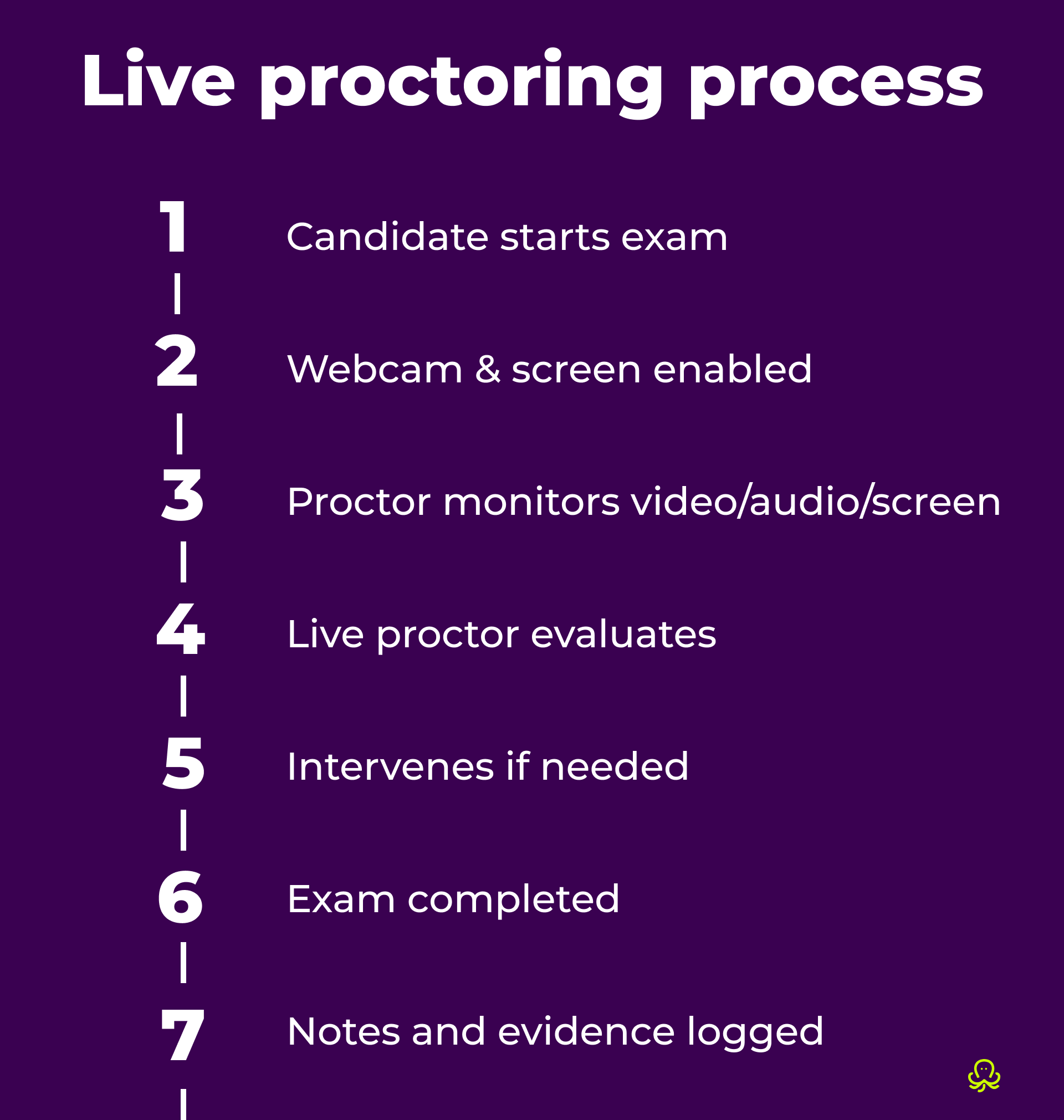
So, what happens during a live-proctored exam? It usually begins with the test taker sharing their screen and keeping their webcam and microphone on. Proctors then monitor multiple signals, including video, audio, and on-screen behavior, to spot issues or suspicious activity. If something seems off, human intervention during tests will take place, whether that means sending a warning, pausing an exam session, or giving clarifications.
Because real people are at the center of remote live proctoring, it brings a level of understanding and flexibility that automated tools simply can’t match. Live proctors can pick up context (such as a nervous habit, a power outage, or a sudden tech glitch) and respond appropriately. This human touch in online testing helps ease unnecessary stress for test takers.
Online live proctoring works best for exams where fairness, trust, and immediate assistance really count. It helps learners feel supported, knowing that someone is there to ensure online assessment integrity throughout the entire process.
For more details on how this method works and how it can benefit your organization, explore our live proctoring solution.
Human proctoring is often misunderstood. Some see it as strict surveillance or a sign of distrust, but that’s far from what it really is. When done right, it serves as a supportive safeguard that keeps testing fair, not a tool for control.
That said, there are a few common misconceptions worth clearing up:
First, it’s not a corporate compliance nightmare. Live online exam proctoring doesn’t mean heavy surveillance or a lack of trust. Proctors are trained to protect both academic integrity and test taker dignity, stepping in only when something truly requires attention.
Second, it’s not a replacement for exam rules. A fair test still depends on clear policies set by the institution. Proctors follow those rules; they don’t create or enforce new ones.
Third, live exam supervision isn’t just AI with a human sticker. Real proctors don’t rely on automated alerts to decide what’s suspicious. So, what does a live proctor do? They make decisions based on context. Artificial intelligence might detect unusual behavior, but only people can interpret what’s really happening.
Finally, it’s not meant for every situation. Using this method for every quiz or large-scale test would be overkill. Live proctoring for high-stakes exams is the most common use, because that’s when careful attention and thoughtful responses are needed whenever something unusual happens.

When used the right way, remote live proctoring quietly keeps everything under control without making test takers feel watched.
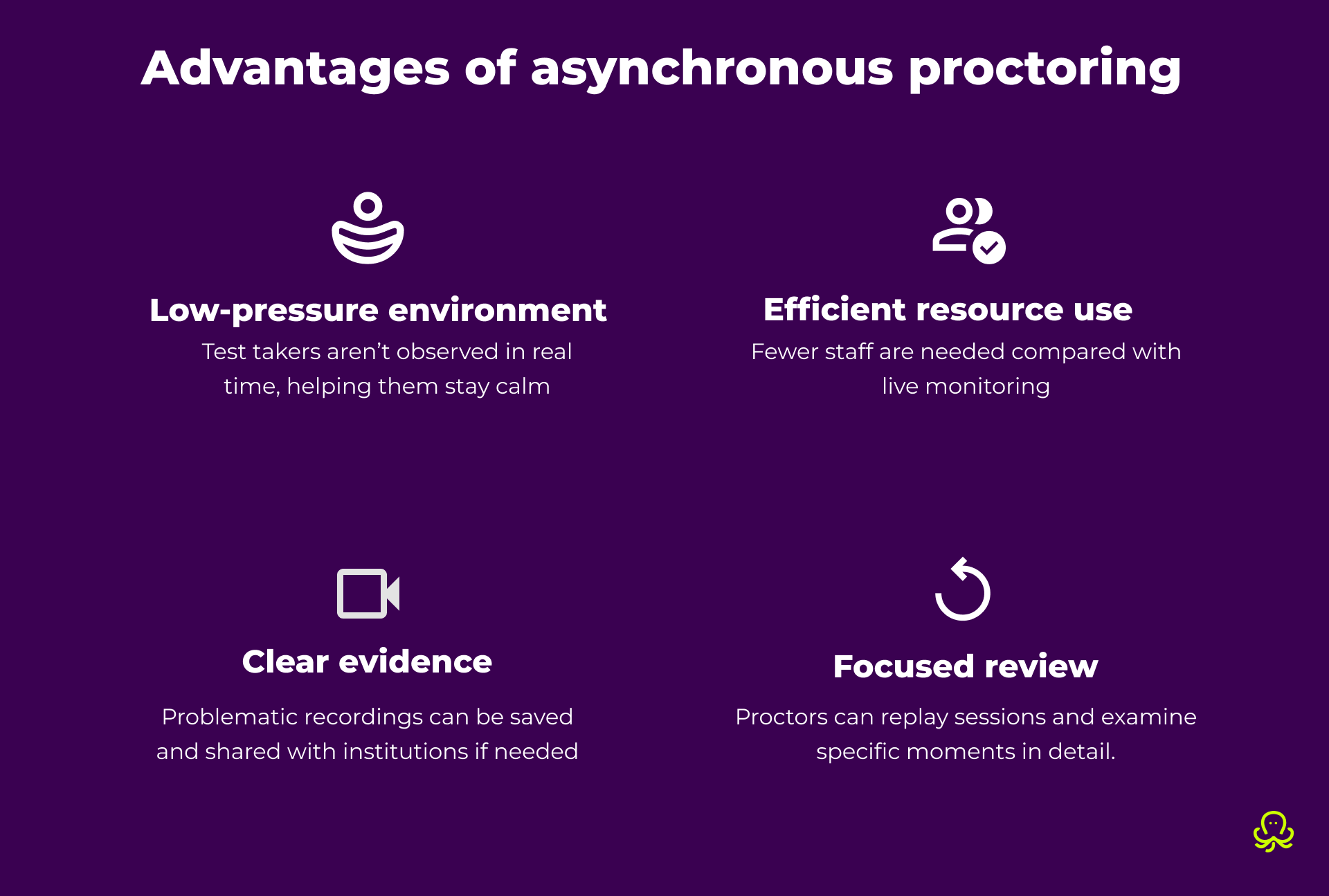
Asynchronous proctoring, also called record-and-review proctoring, is a method where the exam session is recorded and reviewed later by trained proctors instead of being monitored live. Test takers still share their screen, webcam, and microphone, but rather than intervening immediately, the proctor reviews the session afterward to spot irregularities or suspicious activity.
Even though it’s not live, asynchronous proctoring is still part of the live proctoring system because it relies on real people. Similar to real-time supervision, trained proctors examine the test taker’s webcam feed, microphone audio, and on-screen actions. The key difference is that they can pause, rewind, and focus on specific parts of the recording for a closer look.
Because the review happens after the exam, candidates tend to feel less stressed and can concentrate more on completing their test. This method helps maintain exam credibility for large-scale or lower-stakes assessments without requiring a proctor to watch everyone at the same time. It keeps exams fair and supports secure online testing, even for organizations that can’t offer live invigilation for all sessions.
Asynchronous proctoring also creates a detailed record of each session, so institutions have an efficient way to review incidents or handle appeals while keeping the process both cost-effective and transparent.
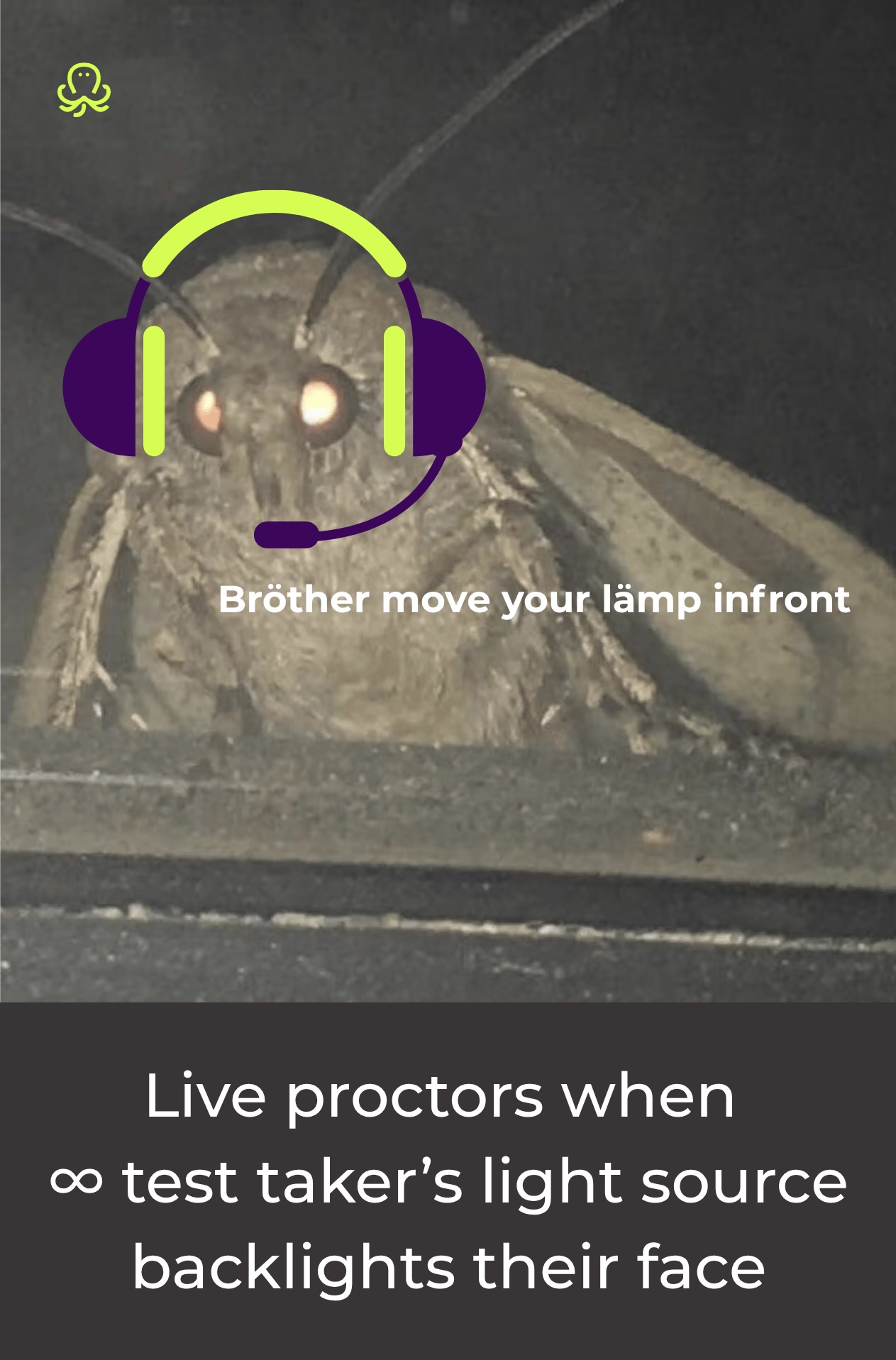
Live proctors are trained professionals who supervise online tests in real time. They are skilled remote invigilators who understand assessment etiquette, privacy regulations, and how to navigate the proctoring platform. Calm and clear communicators, they can handle tricky situations, document incidents, and decide when intervention is necessary. This is exactly how live proctors monitor online exams to keep testing fair and enforce the rules.
Their responsibilities cover the entire exam process. Before the test, proctors perform quick tech checks, confirm that the testing environment meets requirements, and remind candidates which aids are allowed or prohibited. During the exam, they provide live remote supervision, and observe multiple feeds, such as the webcam, microphone, screen, and a second camera angle through mobile (if enabled). They manage chat or audio messages, look for suspicious behavior, and apply rules consistently. When issues arise, they stay calm and guide the candidate, pausing the session or asking questions to make sure everything is clear.
The work of a proctor doesn’t end after the exam. They finalize their notes, include relevant evidence, and flag important incidents that need further review. For organizations that use third-party proctors, these records go directly to the reviewing team. If the institution assigns its own staff, OctoProctor’s platform allows internal proctors to revisit sessions, examine flagged moments, and confirm their findings.
Organizations can assign in-house staff as live proctors or partner with certified third-party providers. In both cases, OctoProctor’s platform provides all the tools needed for real-time exam monitoring. This helps maintain fairness, prevent cheating, and support a positive experience for every test taker.
Human proctoring helps keep online exams fair and trustworthy while maintaining a human element in the process. It gives institutions confidence in the results and provides learners with the reassurance they need. Because real people are involved, the process remains consistent and transparent, no matter where the exam takes place.
One of its biggest advantages is instant human judgment. Unlike automated tools that flag every unusual movement, live proctors can understand what is actually happening. They can tell the difference between a student checking notes and one simply thinking out loud, or between a nervous glance and an attempt to cheat. This human understanding helps prevent honest students from being marked unfairly.
The ability to act immediately is another one of the benefits of having a live proctor. Supervisors can respond quickly and guide the test taker if ever a problem comes up, such as a technical issue or a question about the rules. There is no need to stop the entire test to sort it out.
Moreover, having a real person available for support makes the testing experience more manageable for examinees. When a proctor listens and communicates with care, test takers can stay calm and focused throughout the exam. This is especially helpful for anxious individuals and first-time test takers.
Since people — not software — make the decisions, false positives are much less likely. Human proctors can better interpret differences in accent, tone, or behavior, which makes the process fairer for all types of learners.
Most importantly, live exam supervision builds trust. Trained professionals oversee each session, and because of that, institutions and learners can be sure that results are accurate and transparent.
To keep it short, here’s what live proctoring does:
Online live proctoring isn’t necessary for every exam, but in certain situations, it can make a real difference. Here’s when organizations might consider having a trained human watch the test in real time.
High-stakes professional exams, such as medical or legal licensing tests, require careful supervision. Live proctoring for board exams provides that level of oversight, ensuring that rules are followed and allowing proctors to intervene immediately if examinees encounter technical or procedural problems.
Exams with oral responses, interactive components, or tasks that rely on communication skills work better with real people watching. Live proctoring for university finals and live proctoring for entrance exams are ideal ways to detect subtle details and provide quick clarifications when the situation demands it.

Live proctoring works best for smaller cohorts. With fewer test takers, proctors can monitor each participant more closely and keep the testing environment well-organized. Medium-sized groups can also benefit, for example, when taking online tests for competitive programs or certifications.
First-time online test takers, students with accommodations, or anyone unfamiliar with digital exams may need more guidance. Proctors can provide candidate support during exams, and it can be in the form of clarifying instructions or assisting with technical questions.
Assessments in clinical, financial, or high school settings may involve information or decisions where delays could cause serious problems. Having someone watch live allows proctors to act immediately and protect the online assessment integrity and safety of the exam.
Sure, AI-assisted live proctoring or automated systems can handle much of the process, but it remains important to have real people supervise context and judgment. When a proctor focuses on specific sections or higher-risk candidates, it helps keep the session running smoothly. This hybrid proctoring model combines the best of both worlds: efficiency and human oversight.
Live proctoring is crucial for exams where security, fairness, and the ability to offer quick support are essential for a smooth testing process. Such assessments include high-stakes assessments, exams with interactive sections, or smaller groups. With real-time human monitoring, institutions can keep the process secure and smooth while also stepping in to support test takers if something goes wrong.
For professional licenses, finals, or major certifications, human proctoring hits the sweet spot between vigilance and support.
Take control of your online assessments with OctoProctor’s live proctoring platform. Discover how our tools help institutions oversee exams effectively, streamline proctor management, and maintain confidence in exam outcomes, without needing a large internal proctor team.
Talk to usYou can hire remote live proctors directly by writing a clear job description, screening CVs and voice samples, and conducting short interviews to assess communication and professionalism. Another option is to work with third-party services that supply trained remote proctors. In both cases, share your exam rules, procedures, and ethics expectations upfront so proctors know exactly what is required.
A strong live proctor remains calm under pressure, stays focused for long periods, and communicates neutrally with test takers. They must follow exam rules precisely, use sound judgment during unexpected situations, and maintain strict ethical boundaries to protect students and institutions.
Essential qualifications include clear communication skills, strong technical proficiency, and comfort navigating proctoring tools. Experience in education, testing environments, customer service, or compliance roles is helpful. Many institutions also require background checks to ensure trust and safety.
Outsourcing can simplify scheduling, provide multilingual or 24/7 coverage, and reduce administrative load. However, it may give you less control over training, consistency, and individual proctor behavior. Institutions should compare costs, coverage, governance practices, and quality assurance before deciding.
A good live proctor job description outlines core duties (monitoring, identity checks, and incident reporting), required qualifications, ethics standards, technical requirements, schedule expectations, and communication guidelines. Clear descriptions help attract the right candidates and set expectations from day one.