If someone had asked me ten years ago what educational technology looked like, I probably would have talked about learning management systems, interactive whiteboards, and maybe a handful of educational apps. Today, that answer feels incomplete.
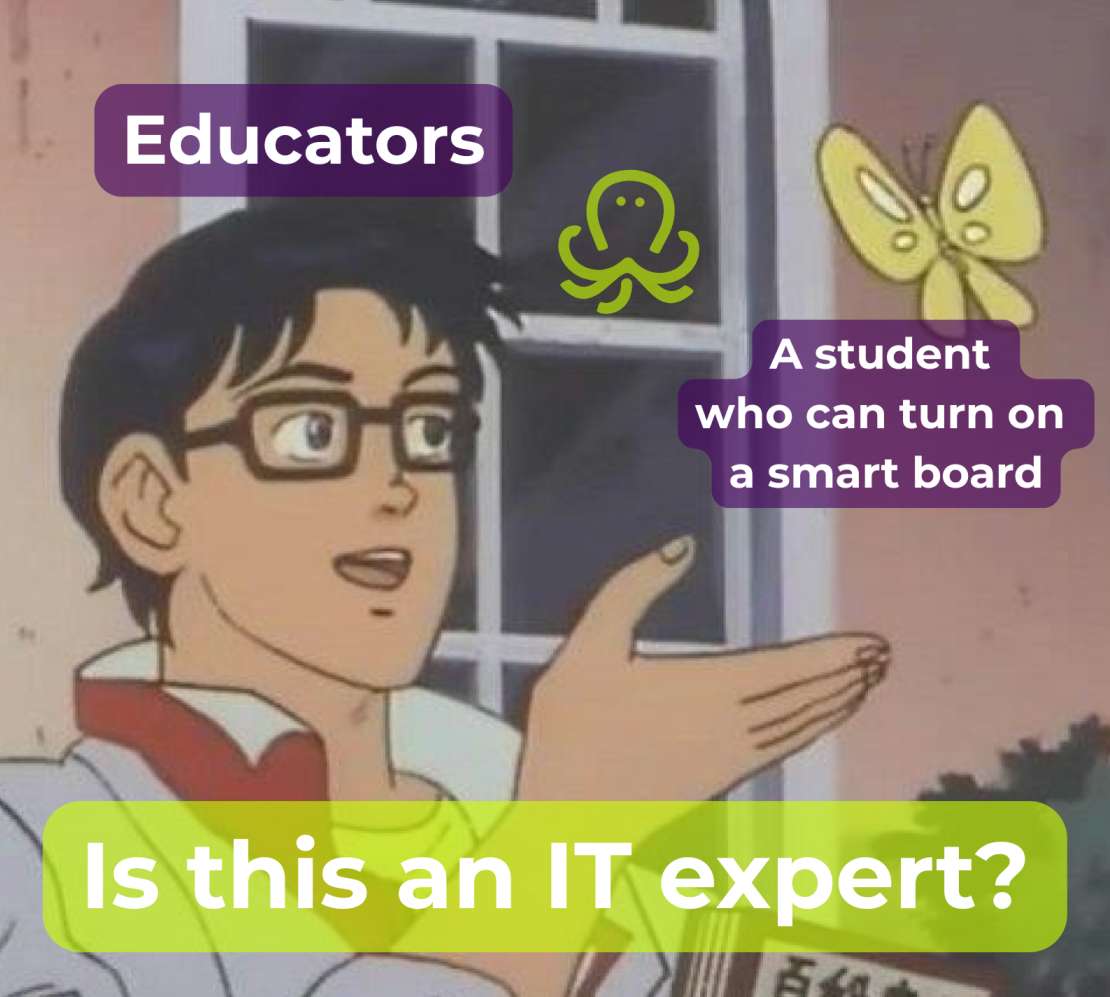
Educational technology (or EdTech, as we all call it) has evolved far beyond digitizing traditional classrooms. The most exciting technologies used in education today aren't simply replacing paper with screens. They're changing how learning is delivered, personalized, measured, and verified.
Some help students learn at their own pace. Others create immersive experiences that would be impossible in a traditional classroom. Some make education more accessible. Others help institutions ensure that a credential earned online is just as meaningful as one earned in person.
So let’s explore eight educational technology examples that are actively shaping education in 2026 and likely will continue doing so for years to come.
It's impossible to talk about new technologies in education without starting with artificial intelligence. Yes, today AI is everywhere (even when it’s absolutely not necessary, but it’s not the case for EdTech).
Generative AI has moved from experimentation to everyday use in remarkably little time. Students use AI assistants to explain concepts, summarize materials, generate practice questions, and receive instant feedback.
Source: Antropic Education Report
Source: Antropic Education Report
Tools like Claude, ChatGPT, Gemini, and specialized educational AI platforms have fundamentally changed expectations around learning support. Instead of waiting for office hours or searching through documentation, learners increasingly expect immediate, conversational assistance.
Of course, AI also introduces new challenges around critical thinking, academic integrity, and assessment design. But regardless of where the debate lands, generative AI has become one of the most influential educational technology examples of our time
One-size-fits-all education has always been a compromise. Adaptive learning platforms attempt to solve that problem by adjusting learning paths based on individual performance, behavior, and progress.
Rather than moving every learner through identical content at the same pace, adaptive systems continuously evaluate understanding and recommend what should come next. Students who master a concept quickly can move ahead, while those who need additional support receive it without feeling left behind.
Platforms such as DreamBox and Smart Sparrow demonstrate how technology can create more personalized learning experiences while helping educators scale individualized instruction.
Among all technology in education examples, adaptive learning may be one of the clearest illustrations of technology improving learning rather than simply digitizing it.
Education is becoming increasingly data-driven — every interaction within a digital learning environment generates information. Learning analytics platforms transform that information into insights that help educators understand engagement, identify struggling learners, and improve outcomes.
Institutions now use educational data to answer questions such as:
Rather than relying solely on intuition, educators can make evidence-based decisions supported by meaningful data.
Modern educational technologies, including adaptive learning platforms we’ve spoken about earlier and learning management systems (LMS), increasingly include built-in analytics capabilities. These tools allow educators to track learner progress, monitor engagement, and evaluate the effectiveness of instructional content without relying on separate systems.
For deeper analysis and reporting, many institutions also use third-party business intelligence and data visualization tools such as Microsoft Power BI and Tableau to combine educational data from multiple sources and uncover broader trends.
Rather than relying solely on intuition, educators can make evidence-based decisions supported by meaningful data. As educational ecosystems become more sophisticated, learning analytics is quickly becoming one of the most valuable technologies in education.
For decades, educational success was often measured by time spent learning. Now it is increasingly measured by demonstrated competence instead. Skills-based learning focuses on what learners can actually do rather than how long they have spent in a course. Competency tracking systems help institutions monitor progress against specific skills, learning objectives, and professional requirements.
Examples of skills-based learning technologies include Degreed, which helps organizations map learning activities to competencies and career pathways, and Anthropic Academy, which provides structured learning programs focused on practical AI literacy and real-world skill development. Many modern LMSs and learning experience platforms (LXPs) also include competency frameworks, skills assessments, and proficiency tracking features.
This shift is particularly visible in workforce training, professional certification, and continuing education, where employers care less about seat time and more about demonstrable capability.
As a result, competency frameworks and skills tracking technologies are becoming a growing part of the educational technology landscape.

Meme saying “When you task a fresh project management graduate to reorganize a team.” Below the text is an image of a person sitting at a desk underwater in a swimming pool, reading papers, suggesting impractical academic-forward management.
Modern learners are busy. They expect learning experiences to fit into their schedules rather than requiring schedules to adapt to learning.
Microlearning addresses this reality by delivering content in small, focused units that can be completed quickly and often from a mobile device.
Instead of spending an hour completing a course module, learners might watch a five-minute video, complete a short exercise, or review a single concept during a commute or lunch break.
Popular examples include language learning platforms such as Duolingo, professional development platforms like Udemy and Coursera, and mobile-first learning experiences delivered through modern LMSs and training platforms. Many certification providers and corporate training organizations now structure content into short, focused learning units designed for just-in-time learning.
The success of microlearning demonstrates that sometimes educational innovation isn't about making learning bigger. It's about making learning easier to access.
Some concepts are difficult to understand through text or video alone. Immersive learning technologies use virtual reality (VR), augmented reality (AR), and extended reality (XR) to create experiences that place learners directly inside the learning environment.
Examples include Labster's virtual science laboratories, Anatomy 4D's augmented reality anatomy visualizations, and Meta Quest-based educational experiences used in medical, engineering, and technical training programs. Aviation academies, healthcare institutions, and manufacturing organizations increasingly rely on immersive simulations to provide hands-on practice in safe, controlled environments.
Medical students can explore human anatomy in three dimensions. Engineering students can interact with virtual equipment. Aviation trainees can practice procedures in realistic simulations before ever entering a cockpit.
These technologies create learning opportunities that would otherwise be expensive, dangerous, or impossible to reproduce. While immersive learning is not necessary for every subject, it is becoming increasingly important in fields where practical experience matters
One of the most meaningful applications of educational technology is making education accessible to more people. As more learning moves online, institutions need to ensure that digital experiences are usable by people with diverse abilities, devices, and learning needs. Accessibility is no longer a niche consideration or a compliance checkbox — it is becoming a fundamental part of modern educational design.
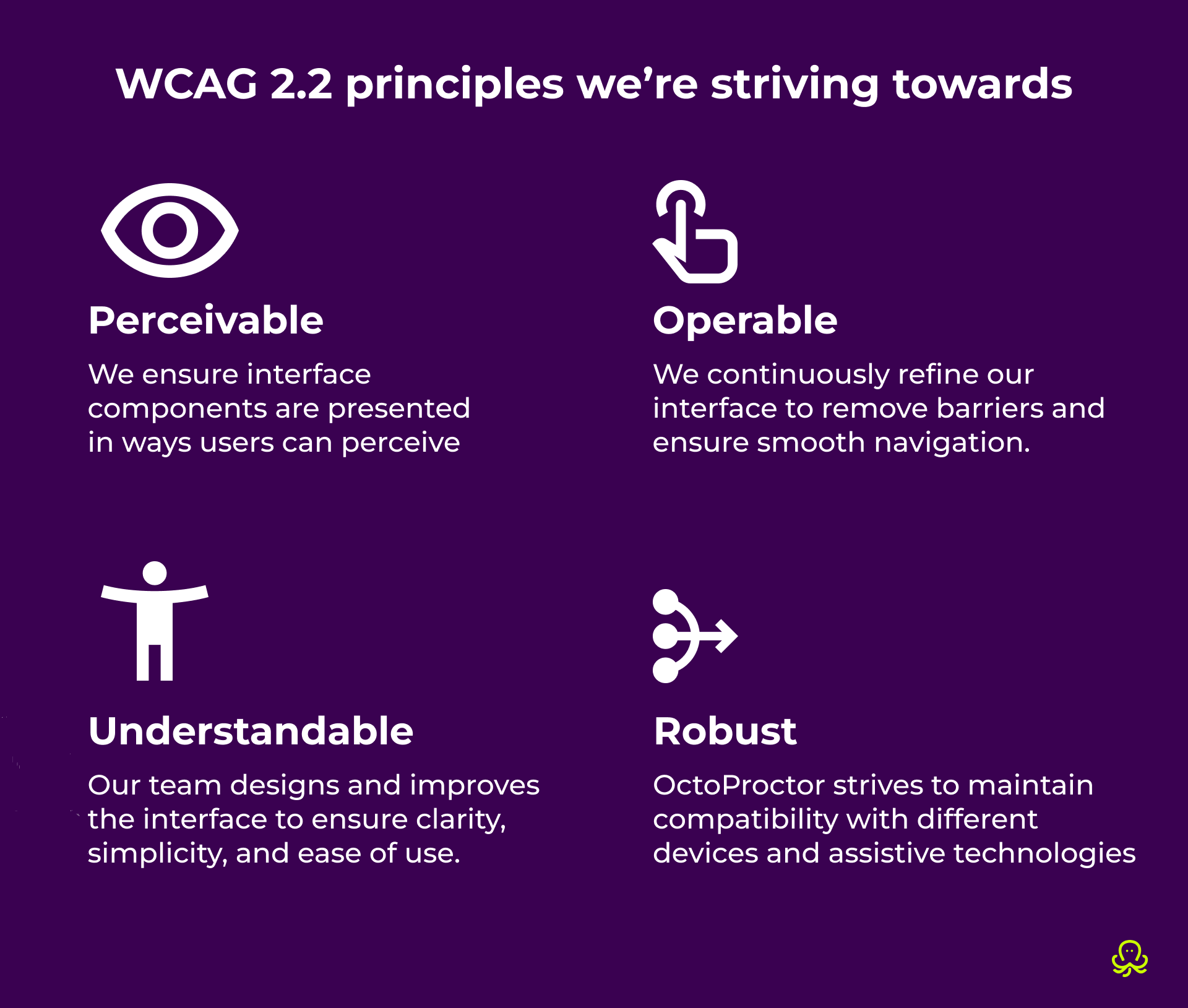
One of the most widely recognized accessibility frameworks is the Web Content Accessibility Guidelines (WCAG), developed by the World Wide Web Consortium (W3C). WCAG helps organizations create digital experiences that are accessible, inclusive, and usable for as many people as possible.
The framework is built around four core principles — Perceivable, Operable, Understandable, and Robust (POUR) — shown below.
Assistive technologies help learners overcome barriers related to vision, hearing, mobility, language, and learning differences. Examples include:
These technologies help ensure that educational opportunities are available to a broader range of learners, regardless of their circumstances or abilities.
As accessibility expectations continue to rise, assistive technology is becoming a core component of modern educational environments rather than a specialized add-on. Educational institutions, software providers, and assessment platforms increasingly design their products with accessibility in mind, recognizing that inclusive experiences benefit all learners, not just those who rely on assistive technologies.
Learning is only one side of education, assessment is another one, and it matters too. As more learning takes place online, institutions need reliable ways to verify identity, measure achievement, and protect the value of credentials. Modern assessment technologies include identity verification, participation monitoring, browser-based assessment security, and AI, automated, or live proctoring.
Solutions such as OctoProctor help organizations deliver secure online assessments while balancing assessment integrity, accessibility, privacy, and test-taker experience. When students, employers, certification bodies, and educational institutions trust assessment outcomes, online learning becomes more valuable for everyone involved.
Looking at these eight educational technology examples together, a clear pattern emerges — none of these technologies operates in isolation. Generative AI, adaptive learning, analytics, microlearning, immersive experiences, accessibility tools, competency tracking, and online assessment technologies increasingly work together to create personalized learning ecosystems.
Rather than delivering identical experiences to every learner, modern educational technology enables institutions to adapt learning paths, provide targeted support, measure progress more effectively, and verify outcomes with greater confidence. And the future of education is defined by how these technologies work together to help every learner succeed.
Educational technology is making learning more personalized, accessible, and engaging than ever before. See how OctoProctor helps organizations verify learning outcomes while balancing integrity, accessibility, privacy, and test-taker experience.
Let's talkEducational technology examples include generative AI tools, adaptive learning platforms, learning analytics systems, immersive learning technologies (VR, AR, and XR), microlearning platforms, assistive technologies, online assessment solutions, and competency tracking systems. These technologies help improve learning outcomes, engagement, accessibility, and assessment integrity.
Some of the most widely adopted technologies used in education include AI learning assistants, adaptive learning software, learning management systems, learning analytics platforms, virtual and augmented reality tools, educational apps, accessibility technologies, and online assessment platforms.
Examples of technology in education for students include AI tutors, language learning apps, virtual laboratories, adaptive learning platforms, accessibility tools, microlearning applications, and online assessment systems. These technologies help students learn more effectively and at their own pace.
Educational technology, often called EdTech, refers to digital tools, platforms, and systems designed to support teaching, learning, assessment, and educational administration. Examples range from AI-powered learning assistants and virtual reality simulations to online assessment and proctoring technologies.
Some of the newest technologies in education include generative AI, AI-powered learning assistants, immersive learning environments, adaptive learning systems, advanced learning analytics, and personalized learning platforms. These technologies are transforming how educational content is delivered and assessed.
An example of technology in education is an adaptive learning platform that automatically adjusts learning materials based on a student's performance. Other examples include AI tutors, virtual reality simulations, educational apps, and online assessment tools.
Technology improves education by making learning more accessible, personalized, engaging, and measurable. Modern educational technologies help educators deliver tailored learning experiences while providing students with greater flexibility and support.
Higher education institutions commonly use learning analytics, adaptive learning systems, AI-powered learning assistants, virtual laboratories, online assessment platforms, and remote proctoring technologies to support both teaching and assessment.
Workforce training programs frequently use microlearning platforms, competency tracking systems, AI coaching tools, immersive simulations, online assessment technologies, and participation monitoring solutions to support professional development and certification programs.
Online assessment technologies help educational institutions verify identity, evaluate learning outcomes, maintain academic integrity, and support flexible learning models. Modern assessment platforms often combine identity verification, browser-based security, participation monitoring, and AI, automated, or live proctoring.
AI technologies are helping educators personalize learning, generate instructional content, provide instant feedback, automate administrative tasks, and support learners through conversational AI assistants. At the same time, they are encouraging institutions to rethink assessment and academic integrity practices.
The future of educational technology is likely to be increasingly personalized. AI, adaptive learning, learning analytics, immersive technologies, accessibility tools, and online assessment platforms will work together to create personalized learning ecosystems that adapt to individual learner needs.