My favorite human trait is being a dreamer. If we never dreamed, we would have never ended up with extensive cultural and technological heritage. Of course, people have fallen victim to dreamers who went too far with fake it till you make it (Forbes 30 under 30 is notorious for it).
But were their ideas that crazy? On paper, revolutionary. And maybe the technology will catch up to those ideas. I can imagine a micro-sampling company that would squeal when someone brings up Theranos. Like we in proctoring twitch when people bring up 2020.
Is AI in education that wild? Was the World Wide Web outrageous? We’ll discuss it in this article too. During every era, humanity panics before accepting the change, internalizing it and moving on as if nothing happened.
Before the digital age, technology in the classroom centered on simple yet effective learning tools that shaped formal education for generations.
I would not call any of the history of education examples fancy, but they defined modern instruction and set learning objectives more clearly. Writing, the chalkboard, and the printing press did their job by formalizing education, building academia, and making education mass – and for that, we should be warmly thankful as we head into the future.
The evolution of technology in education probably starts with writing that transformed oral tradition into a structured, cumulative system.
In Plato’s Phaedrus, Socrates criticizes writing because learners may trust external marks rather than develop memory and genuine understanding. Socrates’ anxiety sounds modern: “students will stop thinking for themselves” was said about calculators, search engines, and AI.
"For this invention will produce forgetfulness in the minds of those who learn to use it, because they will not practice their memory. Their trust in writing, produced by external characters which are no part of themselves, will discourage the use of their own memory within them. You have invented an elixir not of memory, but of reminding; and you offer your pupils the appearance of wisdom, not true wisdom, for they will read many things without instruction and will therefore seem to know many things, when they are for the most part ignorant and hard to get along with, since they are not wise, but only appear wise."
Can you imagine learning complex concepts without writing them down? To me, it is harder to memorize when typing. I may not want to imagine modern learning without writing, but it is definitely moving that way, and not because humanity is flirting with brain chips. Humanity got too creative with academic cheating, and for many higher ed educators, oral vivas seem to be the last frontier.
The Gutenberg Press changed the world, much like the wheel did. At least, that’s how communication people see this technological advancement. The press cemented the way we consume information even as we move further from print and possibly linear 2D presentation.
Religion was actually the primary driver behind mass printing and education. Yup, the religion that persecuted Galilei, Bruno, and Servetus actually played a big role in what would challenge it later – literacy. This is one of the reasons why I envision education as Ouroboros.
The first inhabitants of New England were devout Christians who recognized the need to provide their children with an education that would enable them to read and understand the Bible. The Massachusetts General Court mandated the appointment of a schoolmaster for each town in 1647. The demand for textbooks, and by extension, printing presses, skyrocketed as a result. With sales of more than three million copies over 150 years, the New England Primer ranks among the most popular early American textbooks.
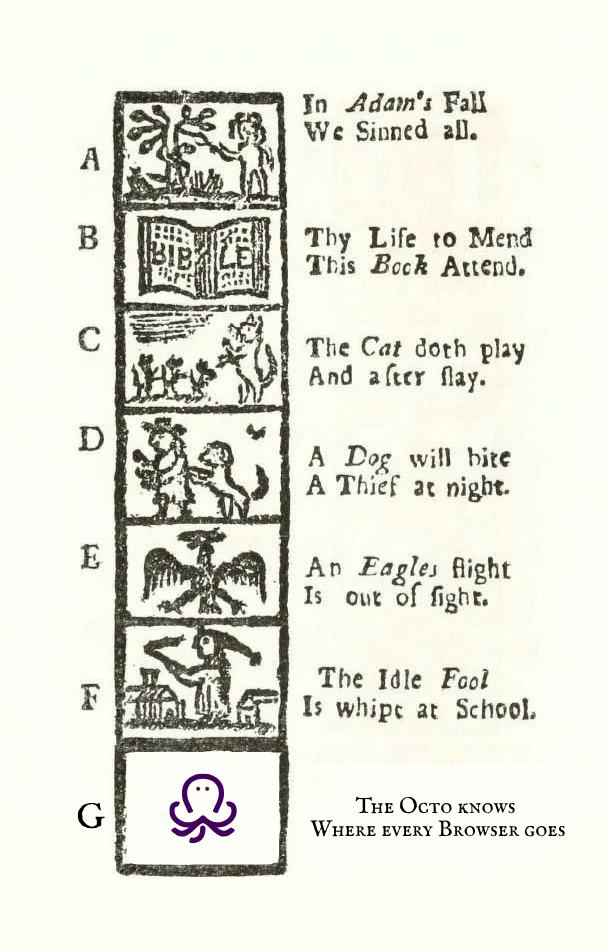
Since each scribe had their own unique handwriting and educational background, there was no set format for the manuscripts. That led to many books containing typos and grammatical errors. The printing press made it possible to quickly and easily disseminate a standartized educational curriculum over vast distances. On top of that, printing revolutionized STEM education by enabling the reproduction of intricate diagrams with pinpoint accuracy.
Less affluent people could not access education because costly, time-consuming manuscripts were the only means of transmission. Textbooks enabled students to learn both in and out of the classroom, setting traction for both distance and self-education.
The chalkboard now feels like the sternest remaining symbol of traditional schooling. It has been on life support in the Global North, but we may see the blackboard coming out for an encore one last time in this coming decade.
History of technology in education enters large-group instruction. Yet, in 1830, half of Yale's student body was expelled for a single heinous transgression.
Students were previously permitted to refer to the figure in their textbooks while answering problems involving figures. With the introduction of blackboards, students were required to solve problems by writing them down and then using memory to retrieve any necessary figures; they were not allowed to return to their books during this time. Students in Yale's sophomore geometry classes flat-out refused to take the tests administered using this board-based method of problem-solving in 1830.
The Conic Sections Rebellion was the largest student uprising that Yale had ever seen. Moreover, it was a “sequel” to the first blackboard rebellion in 1825. As you can see, there were student protests against more reliable exam results before proctoring.
While enlightenment was getting commercialized and knocking on home doors, education was also moving further from home, allowing more mobility and freedom of choice. The 20th century was when inclusion began to widen to account for people of color, less financially fortunate strata, and (gasp!) females.
The 20th century also marked a significant shift in classroom technology with the introduction of educational media, such as film, radio, and television. New media transformed learning into a dynamic and engaging experience that now included the entire household. Educational media also laid the foundation for interactive technology, preparing students for a future with internet access and free informational flow.
Film entered education way before radio, but was also rejected like any other advancement discussed here. The fear that video means “not real teaching” has never fully disappeared, however. Nonetheless, I think this perception will end with my generation. We owe it to YouTube explainers, particularly Indian YouTubers, for their masterful guides that often saved our butts hours before exams ;)
%20at%20the%20forefront%20of%20educational%20technology.png)
Yet, inventors like Thomas Edison saw cinema in the late 19th century as a game-changing device that could supplant textbooks by bringing recorded realities into the classroom. That still sounds amazing to my late Millennial ear.
Cinema was once thought of as a tool for scientific research and scientific exposure, before it was acknowledged as an art form. French microbiologist Jean Comandon corroborated this in his films L'Ultra microscope et la cinématographie (1909) and Le Microbe de la fièvre (1910), in which he linked the microscope with the cinematographic camera.
In a very human manner, the resistance intensified when film gained sound. Accusations such as inflexibility of the commentary, division of student attention, mechanized presentation of subject-matter (and here we are, buying standardized exams and curricula – the educational authorship is nearly dead).
From its infancy through the 1920s, the war years, and the early 2000s, cinema has consistently found its way into classrooms across a variety of contexts that enabled or supported its use for various purposes, including commercial, instructional, and behavioral.
As print journalism wraps up across the globe, the radio went dead silent much earlier. I do not know a single Millennial or Gen Z person who listens to radio in 2026 – we have our Spotify, Apple Music, YouTube. Nonetheless, when I was in middle school, the entire city was plastered with morning show hosts who were as famous as their TV colleagues. Never thought I would feel like a baboushka when I haven’t turned 28 yet.
But, some 80-50 years ago (when dinosaurs still roamed the planet!), radio was liberating humanity on intellectual and war fronts. Radio was promoted as a way to extend instruction beyond the classroom, but educators were also worried about advertising, propaganda, and students’ ability to judge broadcast content.
Gregory's (2022) article on educational radio notes that advertising and propaganda were “foremost on educators’ minds,” leading to calls for “critical listening.” During the 1937 Chicago polio outbreak, Chicago Public Schools used radio lessons when schools were closed, which makes this a strong historical parallel to remote learning during crises.
%20(1).gif)
Radio was growing faster than TV because it did not require as much monetary investment to set up. Pirate and enthusiast radio stations were popping up around the world, and thus the niche knowledge spread.
It may be legacy media, but humanity largely owes the current course of history to radio.
The 1970s and 1980s marked the beginning of a new era with the integration of computers into education. For some educators, it looked like a student was now dragged between silver, TV, and a chunky computer screen at school and all kinds of arcades beyond.
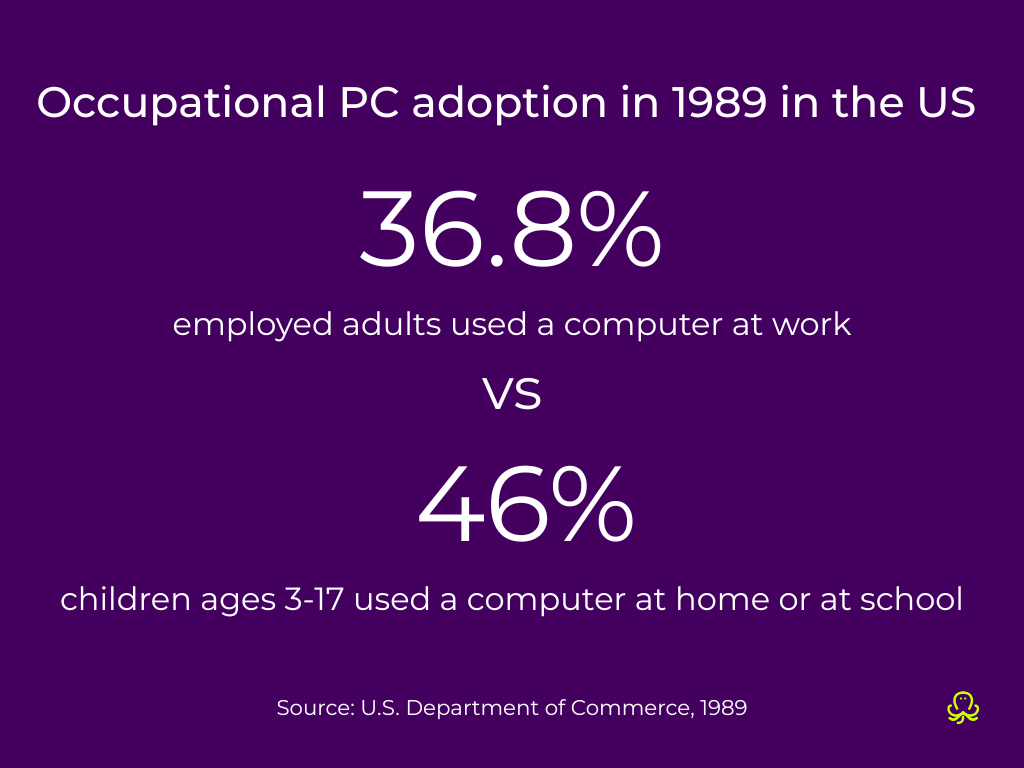
As the first personal computer and portable computer models became more accessible, the use of educational technology grew, allowing teachers to grade tests and track student progress more efficiently. In 1986, the world saw the inception of online courses, offered by New York Institute of Technology. Mass production of personal computers further accelerated this trend, making it easier to equip high school classrooms beyond the mystical career guidance.
.png)
…These articles did not age well! The surge of computers into classrooms was scoffed at as a “flashy symbol of school success” that could divert attention and money from deeper school reform. Of course, some saw that computers could teach at an individual pace, track performance, and identify strengths and weaknesses, but the us-vs-them campification was already unstoppable.
Here’s what Dr. Valdemar W. Setzer had to say about computers in education in 1997:
“We think that, much more often than developing self-control computers develop lack of discipline. Let us make a simple comparison. When handwriting a letter or typing it with an old-fashioned typewriter, a person has to exercise a tremendous mental discipline. In fact, the possibilities for making corrections are extremely limited; a neat format is only reached through painful observation and control on how the lines are being written. Now compare with the use of a text editor. The user does not have to pay almost any attention, because she will be able to change everything, move paragraphs or phrases around, and obtain a neat print just by choosing appropriate commands or icons. She doesn't even have to pay much attention to spelling and grammar, because correctors will detect most of her mistakes and suggest corrections.”
As a 1998 baby, let me tell you that it was very hard to take these arguments with a grain of salt. Because even for 1997, these were radical and not in a good way. There was no consideration of accessibility at all, especially in criticism of text editors of all things.
I also wonder: do older generations of purist scholars understand that the “new” generations they slander and infantilize (compulsively calling an imaginary incompetent school student a she was quite rough) are in the room too? Late Gen Z already have an aversion to the objectification they are subjected to. Soon, Gen Alpha and Beta will grow up, and I am sure they will see AI-panic as wild as making a sinner out of the text editor. Your digital footprint becomes more delusional by the year.
Did the internet solve the divide in education? Not yet. But by globalizing knowledge, it solved many of the problems that analog education had, making learning a more collaborative, accessible, and inclusive experience for all.
Of course, the internet was hated with passion, and I still see some old-school criticism online: erosion of critical thinking skills, rampant plagiarism, lack of factual quality control, and exposure to harmful media. Compared to the previously discussed tech, does this criticism even sound new?
The rise of online educational technology has enhanced students' ability to learn independently and interact with peers around the world. Traditional resources, such as libraries and textbooks, are no longer the only options for students. Scholarly articles, eBooks, and specialist databases are all at their fingertips, no matter where they are or what time it is.
In order to tailor learning tempos and approaches, adaptive technology and online platforms monitor student development. Students can get individualized help and work on their own learning with this system.
At some point, education stopped being a place and became a login. I say this with love and mild Moodle trauma.
Learning Management Systems, or LMS platforms, did not simply “digitize the classroom.” That sounds like everyone agreed on the migration and nobody cried over missing submissions, broken file formats, or discussion board posts written five minutes before the deadline. In reality, LMS platforms turned education into a structured online ecosystem: course materials, deadlines, grades, quizzes, feedback, attendance, forums, video links, plagiarism checks, and the occasional document named final_final_REALLYfinal.docx.
The LMS changed the relationship between students and institutions because it made learning trackable. Before that, a student could lose a handout and pretend the handout never existed. Now, the student knows that the teacher knows because the system knows. Somewhere in the database, a timestamp is glowing like a tiny moral judgment.
LMS are not a universal solution for online exams either. If cheating is a concern, institutions would need to seek out a native proctoring integration.
But LMS platforms also made education more accessible and portable. Students could revisit materials, submit assignments remotely, catch up after illness, work asynchronously, and study across time zones. For adult learners, international students, working students, disabled students, and anyone whose life does not fit neatly into a Monday-to-Friday campus schedule, this was long-overdue infrastructure.
The principle of early online proctoring was the same as that of its age-old predecessor, conventional proctoring. Online assessments needed credibility, including for quality assurance and accreditation.
Understandably, not everyone was on board with online exams, and legitimacy was perhaps the biggest issue. The principles adopted were basic webcam surveillance and browser lockdowns (yes, they are old-old!). And, y’know, early distance learning grads were recorded in ultra-low quality, yet imperfections never earned the same hysteria as today.
In 2010, Inside Higher Ed was already describing lockdown browsers, fingerprint checks, audio recording, and 360-degree video as fixes for online cheating; the tone was still “how do we secure online programs?”
So, how did the proctoring industry earn “Orwellian” from The Chronicle of Higher Education? Not solely because the old exam hall followed test takers into bedrooms and kitchens. It was questioned because the first generation of tools tried to solve a real trust problem with methods that felt technically clever but socially undercooked: live strangers watching students, webcam room scans, biometric checks, local software installs, fees passed to students, and “incident reports” for behavior that might just be stress, noise, bad Wi-Fi, or being a mammal with eyes.
Online proctoring has walked a long way in both usability and accessibility to be where it is now. Yes, bad proctoring still feels like surveillance theater. But good proctoring eliminates lockdown browser need, creates a controlled testing environment, documents what actually happened, and helps institutions separate genuine misconduct from normal human chaos. All from the comfort of one’s globalized home.
To be fair, artificial intelligence in education is not only ChatGPT writing a suspiciously flat essay about Macbeth. AI already supports adaptive learning, automated feedback, accessibility tools, translation, tutoring, content generation, analytics, and admin workflows. In the best version of the story, it helps students practice more, get explanations faster, and access support that used to depend on whether a teacher had time, funding, or a couple more nervous systems.
Students can now generate essays, solve problems, summarize readings, translate sources, draft code, and produce study notes with a speed that makes traditional homework design look Victorian. Students have always optimized effort, and AI made the optimization industrial.
“Ban it” is a pause button with institutional branding. Schools will still need to decide what students must know without AI, what they may do with AI, and how to assess learning when polished output no longer proves independent thinking. That probably means more oral defenses, process-based assessment, in-class writing, version histories, authentic projects, and clearer disclosure rules. Sorry to everyone who hoped the future would require less rubric writing.
Banning it also delays inevitable transformation. The sooner the population acquires AI literacy, the better it is for education, business, and the Earth.
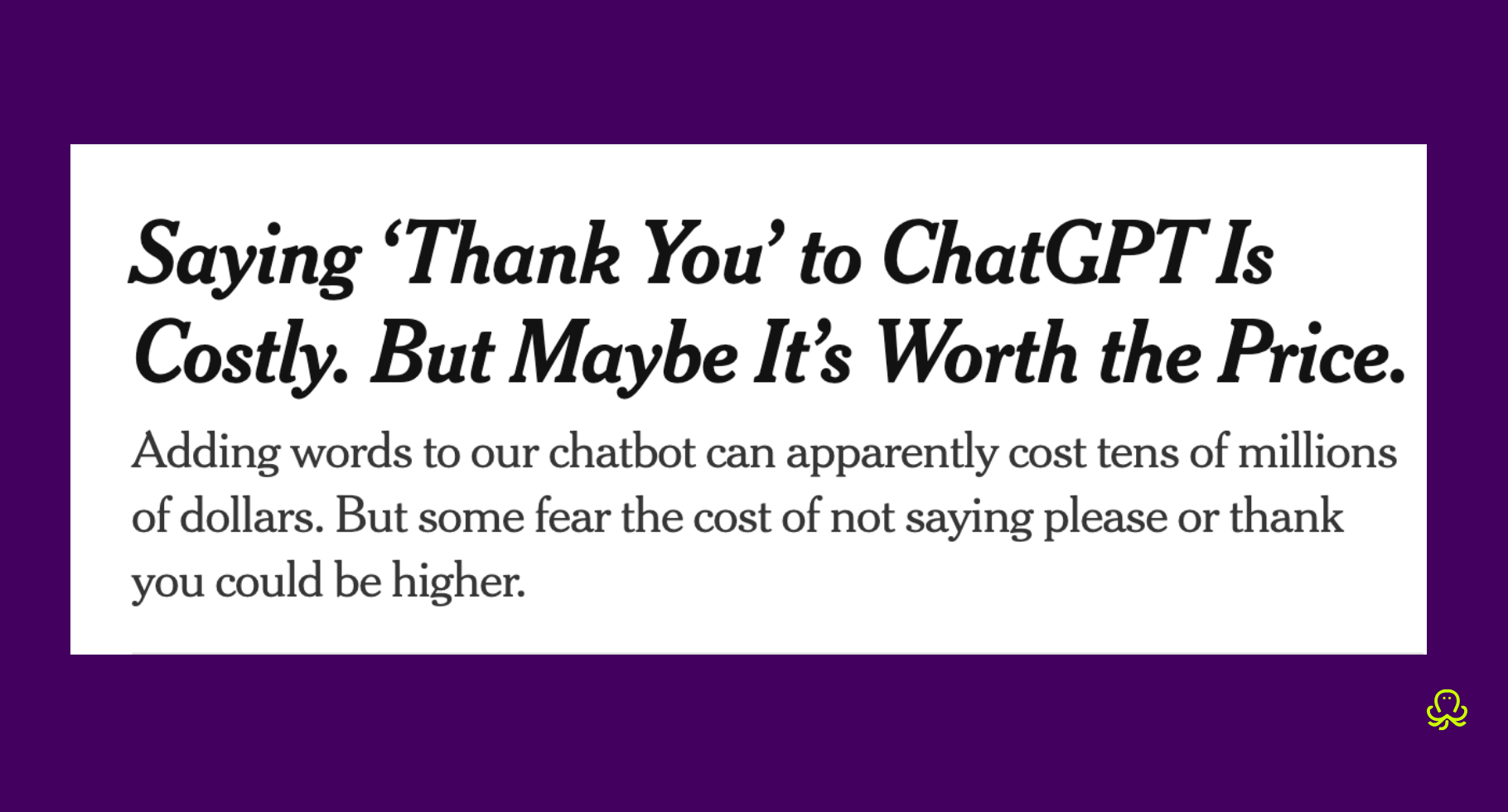
AI also forces education to admit the uncomfortable: a lot of assignments were already easy to game before AI. The machine exposed shallow assessment at scale. If a task can be completed by a chatbot in 14 seconds, maybe the task was not measuring what we thought it was measuring.
The feat and discomfort make AI the newest mirror education did not ask for. Like writing, film, calculators, computers, and the internet before it, AI will probably move from panic object to normal infrastructure.
Looking back on it, I think distance learning was never about cheating but rather about a lack of mutual trust and enthusiasm among all parties involved. You may argue that proctoring or AI do not enhance the learning experience. I argue back that we got too used to accessibility.
The future is inevitable, regardless of whether you want it or not. Humanity can protest and hate it all it wants, but at the end, we have all survived until this point due to immense adaptability. So, the best we can do is keep an open mind and be prepared for the future.
I can say that the evolution of educational technology will inevitably move toward greater personalization, simulation, and immersion. The near future of education is boring and practical. Will this answer satisfy you, though?
For that, direct your gaze to what’s around you. Stargazing is interesting, but that light is millions of years old, meaning you are actually looking back into the past that never was yours to begin with. And those who cannot remember their past are condemned to repeat it.
That’s why you should learn from today’s technology, utilize it to its full potential, and become knowledgeable enough to fix it before accumulating a dozen useless, maldeveloped pieces of tech around yourself.
Good proctoring requires expertise that matches the complexity of the exam at hand. Do not buy a cat in the sack – OctoProctor can help you determine whether you need live, auto or AI proctoring, what add-ons will work well, and pinpoint a threshold that will make both test takers and QA happy.
Book a demo!The evolution of educational technology is the long shift from simple classroom tools, such as writing, blackboards, textbooks to digital platforms. The funny part is that almost every “new” tool was first treated as suspicious, lazy, distracting, or too powerful before becoming a normal part of education.
The history of technology in education matters because it shows that panic is not new. Writing was accused of weakening memory, film was accused of making learning too easy, personal computers were accused of damaging discipline, and now AI is accused of replacing independent thinking. Different century, same moral drama, better internet connection.
The personal computer changed technology in education by making learning more interactive, trackable, and individualized. It helped schools introduce educational software, digital records, online courses, and new ways to monitor student progress, even though early critics feared that computers would reduce creativity and make students mentally lazy.
The World Wide Web moved education beyond the physical classroom by giving students access to online resources, scholarly articles, eBooks, databases, videos, and global peer communication. It did not magically solve inequality, but it made the digital age of learning more collaborative, flexible, and accessible than analog education could ever be.
Learning management systems enhance the learning experience by turning the classroom into a structured online environment with course materials, deadlines, grades, quizzes, feedback, discussion forums, attendance, and submissions in one place. They also support hybrid and distance learning, which is especially important for working students, international learners, disabled students, and anyone whose life refuses to fit into a neat campus schedule.
Online proctoring became part of modern educational technology because remote learning needed remote assessment to be credible. If students can study, submit assignments, and take exams from anywhere, institutions also need ways to verify identity, protect credential value, and separate actual misconduct from normal human chaos like bad Wi-Fi, stress, background noise, or a cat with academic ambitions.
Artificial intelligence is changing the future of educational technology by supporting tutoring, adaptive learning, automated feedback, translation, accessibility tools, content generation, analytics, and administrative workflows. It is also forcing schools to redesign assessment.