We help schools move exams online to reduce the use of paper, ink, and storage space, making assessment processes easier to handle. Students also benefit from secure, efficient testing systems that uphold academic honesty. In turn, this shift supports sustainable exam administration and greener campus operation.
Exams have always been a cornerstone of education, but running them on paper is far more complicated than it appears. Printing thousands of pages, preparing classrooms, distributing test materials, and storing completed scripts all demand significant time, money, and manpower. Beyond logistics, the environmental impact is substantial — paper, ink, and the energy consumed by printers and storage facilities accumulate quickly.
A UK government study published two years ago found that a single student taking the two English language GCSE exams generates roughly 5.6 kg of CO₂ equivalent. While most emissions come from travel and energy used in the exam hall, printing and transporting exam papers still contribute meaningfully to the overall carbon footprint.
Paper-based exams can also create stress for students and staff. Lost scripts, grading errors, last-minute resits, and overcrowded exam rooms are familiar problems. For institutions, the financial and environmental costs repeat every semester, fueling increased interest in paperless exams and the broader question of the sustainability of online exams.
To understand how these challenges came to be, it helps to look back at how exams have evolved and how their growing scale has shaped educational practices and the environment around them.
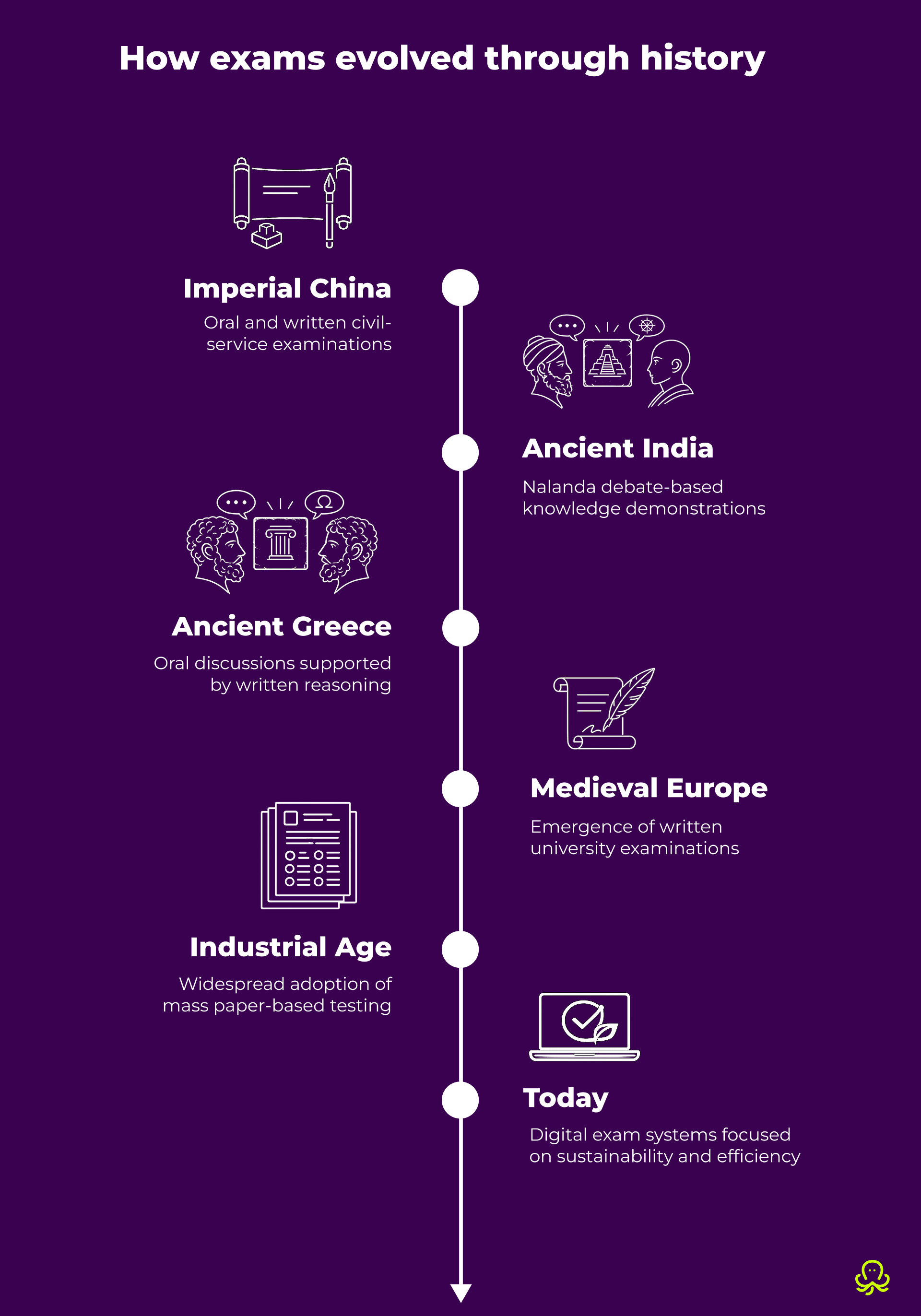
Exams have taken many forms throughout history, and they didn’t always resemble the paper-heavy tests we see today. In imperial China, civil-service examinations used a mix of oral questions and written tasks to identify capable government officials. In Ancient India, students at learning centers such as Nalanda demonstrated their knowledge through structured debates. Ancient Greece also emphasized oral discussions, occasionally supported by written work to show how ideas could be communicated clearly on paper.
Written exams became more common in medieval Europe as universities emerged in Bologna, Paris, Oxford, and Cambridge. Over time, paper-based tests began shaping who could enter certain professions and who could achieve social status. By the 1800s and 1900s, more students were taking exams, and written tests had become the dominant method for assessing learning across the world.
As these exams grew in popularity, so did the demand for materials. More students meant rising consumption of paper and ink, along with the need for storage rooms filled with booklets that had to be printed, transported, and managed every semester. The system continued expanding, even though the resources required to sustain it did not grow at the same pace.
This evolution shows how academic practices are deeply connected to the world beyond the classroom. Running large-scale examinations requires paper, ink, and physical space — resources that have real environmental costs. Recognizing this impact reminds us why sustainable choices matter. Keeping the planet green for future generations depends on understanding how our academic traditions influence the environment and how every decision, even in education, plays a part in the broader ecosystem we all share.
Switching from paper to digital exams isn’t just about adopting new technology. It changes how schools and students handle assessments day to day, making processes easier, saving time, and supporting more sustainable exam administration. Here are some of the ways going paperless truly makes a difference.
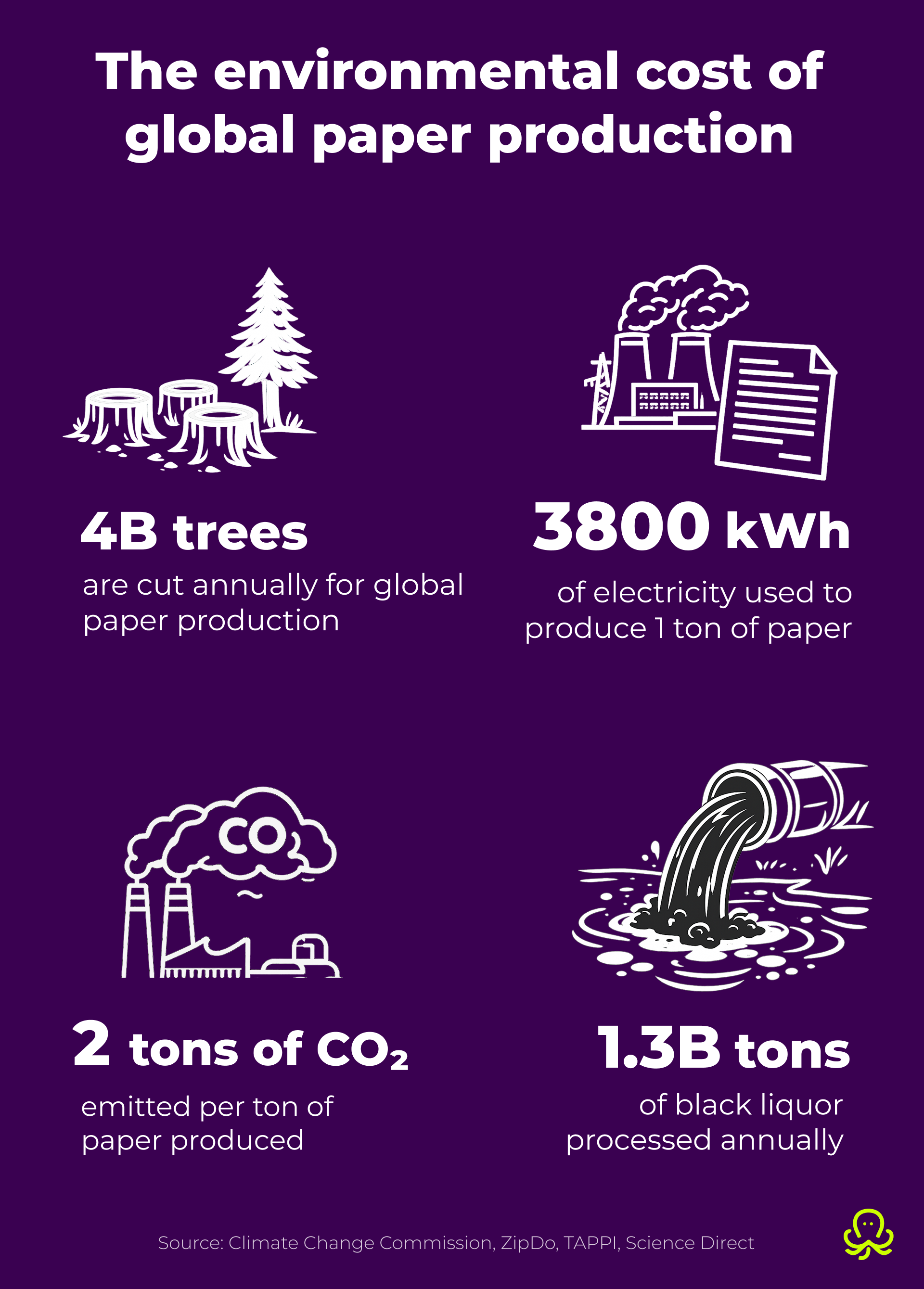
Paper consumption continues to rise globally, and traditional paper production carries a high environmental cost. According to the Climate Change Commission, around 4 billion trees are cut down each year to meet worldwide paper demand. Transforming those trees into paper requires significant electricity, and the physical and chemical processing stages emit large amounts of carbon dioxide. The industry also produces two types of wastewater (black liquor and white liquor), which can pollute water systems if not properly treated.
For schools, printing thousands of exam sheets draws on more than paper alone. Each page represents energy, water, emissions, and the long-term impact of ongoing deforestation. And while recycling helps, institutions must repeatedly manage the cycle of collection, transport, and processing, which never fully offsets the environmental burden of single-use paper.
Going paperless in education shifts that pattern entirely. Digital assessments significantly cut paper consumption, reduce electricity use in production, and eliminate the wastewater associated with pulp processing. For institutions, it also avoids the recurring responsibility of large-scale recycling. Going paperless is a straightforward step toward eco-friendly exams and more sustainable academic practices.
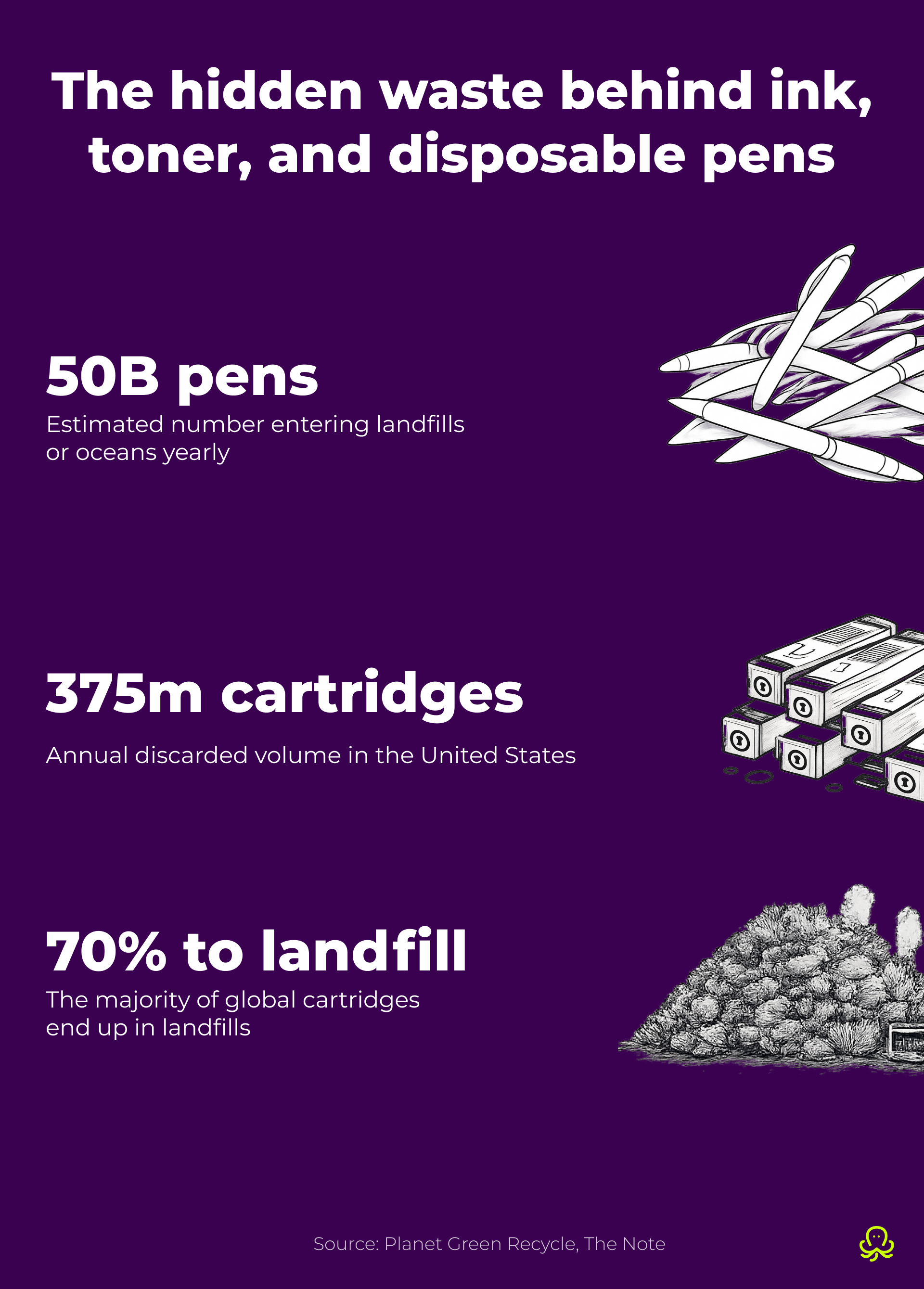
Ink and toner can cause real problems for the environment. According to Planet Green Recycle, hundreds of millions of cartridges are thrown away each year, and about 70 % of them end up in landfills. In the United States alone, more than 375 million cartridges are discarded annually.
Many of these contain VOCs and heavy metals that can contaminate soil and water as they break down. Producing cartridges also requires petroleum, plastic, and large amounts of energy, further increasing their ecological footprint.
Printers themselves add to the problem. Commercial and campus printers consume substantial electricity, and their limited lifespan means they eventually become e-waste. When improperly disposed of, old machines can release toxic chemicals and metals into the environment.
For schools and universities, going paperless reduces far more than paper use. Fewer printed exams mean lower printing and distribution costs, less energy consumption, fewer harmful chemicals in circulation, and a meaningful step toward sustainable, efficient, and modern assessment practices.
Creating, delivering, and managing exams becomes more complicated when paper is involved. Printing large batches, preparing classrooms, coordinating proctors, and transporting materials all consume time, money, and — when tests are conducted remotely — fuel as well.
Paperless exams remove many of these hurdles. Digital platforms allow institutions to design assessments more easily, distribute them securely, and track results without the usual logistical headaches. This shift directly supports exam modernization strategies and reduces administrative stress for staff.
According to SFJ Awards, online assessments can cut marking time by up to 50%, and in some cases, students can receive results instantly. The entire process becomes more efficient, less resource-intensive, and better suited to the needs of both learners and educators.
Pens might seem harmless, but they are far more difficult to recycle than most people realize. A single plastic pen contains multiple small components (plastic, metal, rubber) that must be separated before recycling, and most facilities simply don’t accept them. According to The Note, an estimated 50 billion plastic ball pens end up in landfills or oceans each year. Over time, they release microplastics, toxic ink, and other pollutants that harm ecosystems.

Cheap, disposable pens often cost only $0.05–$0.15 in their countries of origin, but that price doesn’t reflect the true environmental cost: the labor, petroleum-based plastics, production energy, and global logistics behind each one. As major producers like China and India continue manufacturing billions of pens annually, recycling them becomes nearly impossible—and the waste keeps piling up. Reusable or “sustainable” pens exist, but they are more expensive and still rely on materials that eventually need disposal.
Shifting to digital grading eliminates this problem entirely. Online assessment is faster, cleaner, and more efficient, with no stacks of paper, no messy handwriting, and no risk of misplaced results. For schools and universities, digital grading strengthens the overall benefits of paperless exams by reducing waste, cutting clutter, and making exam management simpler for both staff and students.
Paper exams create a lot of juggling. Staff must secure rooms, manage schedules, and coordinate large groups of students, while students deal with fixed times, crowded spaces, long lines, and last-minute room changes. Unexpected absences or clashes only make exam day more stressful.
A paperless system removes most of these hurdles. Exams can take place anywhere and at more flexible times, without the need to gather everyone in the same room. Retakes become easier to arrange — no weekend room reservations, no administrative back-and-forth, and far less bureaucratic overhead. This flexibility also aligns with modern reskilling and upskilling practices, giving learners more control over when and how they take assessments.
Students don’t have to worry about rushing or losing papers, and staff can focus on supporting learning instead of managing logistics. Plus, reducing reliance on paper quietly contributes to higher education sustainability goals.
Monitoring cheating during paper exams can be stressful. Staff must constantly patrol the room, watch for copied answers, and follow up on suspicious behavior — all of which requires time, energy, and additional paperwork.
During the COVID years, a different but related challenge unfolded online. A study published in the Journal of Academic Ethics reported that about 44.7% of students admitted to cheating during online tests. The research also noted that remote proctoring seemed to reduce cheating, even if the data was limited, showing how much proper supervision helps.
With software like OctoProctor, all activity during online exams is duly recorded. This makes it easier for staff to review any suspicious behavior and maintain academic integrity. Institutions can also follow established guidelines — for example, our guide on EU entrance exam policies and best practices — to ensure digital assessments remain fair and protected. And for schools running online entrance exams, OctoProctor offers tools specifically designed to support secure, reliable candidate testing.
Paperless exams also strengthen overall exam security. Digital delivery reduces the risk of misplaced or leaked printed test materials, and controlled access helps keep assessments private. With fewer logistics and fewer distractions, everyone can focus more on learning and less on policing exams, creating a calmer, more efficient experience for both students and staff.
Storing paper exams takes up more space than most people expect. Boxes fill entire rooms, collect dust, and often require chemical treatments to prevent pests. On top of that, storage areas must maintain controlled temperature and humidity to keep papers from deteriorating — all of which adds cost, energy use, and environmental impact. And because these documents must be kept intact, recycling isn’t an option until long after the exam cycle ends.
A paperless setup eliminates these issues entirely. Schools can free up valuable space and repurpose rooms for what truly matters: study areas, offices, collaborative workspaces, or student services. Reduced reliance on physical storage makes campus environments more flexible, efficient, and aligned with modern working practices.
But even after solving the problems linked to paper storage, another environmental challenge still waits on the digital side.
Computers do have an environmental impact, and it’s important to acknowledge that honestly. Every laptop, tablet, or desktop carries an embodied footprint — the emissions created during manufacturing. Producing a single laptop can generate roughly 100–200 kg of CO₂e, and that figure doesn’t include the electricity it will use throughout its lifetime. At first glance, this may seem high compared to printing a stack of exam papers.

But the key difference is that a computer’s largest impact happens once. After a device is manufactured, that footprint is already “paid for,” and the same machine can serve thousands of exam sessions over four or five years. Institutions that maintain a shared fleet of laptops or tablets further amplify this benefit: extending service life, performing repairs, and maximizing usage ensure each device delivers the greatest environmental impact reduction. When devices eventually reach end-of-life, responsible recycling recovers valuable materials and minimizes e-waste. Compared to repeated print cycles that require fresh paper, ink, transport, and storage every semester, digital exams represent a far more sustainable approach.
In practice, those print cycles never really stop. A mid-size school district can spend around $41,000 a year just on copy paper, while very large districts may spend between $275,000 and $400,000 annually to keep exams printed. Every term brings new paper, new ink, and new storage needs — costs and waste that continue year after year.
The digital side also varies depending on how systems are hosted. Many modern exam systems run on energy-efficient cloud infrastructure like Amazon Web Services (AWS). In 2024, AWS matched 100% of its electricity use with renewable energy and continues to publish annual sustainability reports. Choosing platforms hosted in regions with higher renewable energy usage can further minimize the carbon footprint of online assessments. For a deeper look at how smarter hosting and design choices support greener exam delivery, explore insights from OctoProctor.
So yes, computers leave a footprint — but it is a manageable, infrequent impact that can be distributed across years of use. Paper exams, on the other hand, generate new waste every session. With exam digitization, device sharing, and cleaner energy sources, digital assessments offer a more sustainable path that aligns with institutional goals for greener, future-ready education.
Moving to paperless exams gives schools a straightforward way to save resources, streamline assessments, and reduce waste. Students benefit from more flexible, fair, and secure testing conditions that help protect academic integrity in online exams. While devices do have an environmental footprint, shared use and efficient hosting make digital testing far greener than printing exam materials over and over. Paperless exams support broader green education initiatives and make life easier for students and staff while caring for the planet. 🐙
Looking to simplify assessments while reducing paper use and supporting students? OctoProctor helps schools run digital exams with reliable remote proctoring, keeping assessments secure, fair, and easy to manage — all while helping your institution move toward more sustainable practices.
Reach out todayPaperless exams save time, reduce costs, and significantly cut paper waste. They simplify scheduling, grading, and storage while giving students more flexible and accessible testing options. Schools also reduce their environmental footprint and support broader sustainability initiatives by moving away from paper-heavy processes.
Start small — pilot the transition in one course or department using a secure digital platform like OctoProctor. Train instructors and staff, ensure students have access to shared devices if needed, and run a trial exam to test the workflow. Once everyone is comfortable, gradually expand paperless exams across more courses or programs for a smooth, low-stress rollout.
Digital exams can be extremely secure. Platforms like OctoProctor provide encrypted access, identity verification, controlled exam environments, and live or AI-supported proctoring to prevent cheating. Unlike paper exams, digital tests reduce the risk of leaked papers, lost scripts, and unauthorized copies.
Schools spend far less on paper, ink, toner, printers, storage, and administrative labor when exams move online. Over time, these savings add up, especially for institutions that previously printed thousands of exam booklets each semester. Digital workflows also reduce logistical costs, such as transporting exam papers between faculties or campuses.
Digital exams are not fully carbon neutral, but they are more sustainable than traditional paper exams. Devices have an initial embodied carbon footprint, yet this impact is spread across years of use and thousands of exam sessions. Choosing energy-efficient systems, hosting exams in regions powered by renewable energy, and maintaining shared device fleets all help minimize carbon output even further.


Academic integrity begins well before exams – it is a culture fostered by great educators who genuinely care about their students. Join our veteran student, Maria, for a set of practical tips and tricks that will help you prepare your students for proctored exams with minimal memory lapses and stress.