If we compare learning at the beginning of the last century and today, a century may seem like several hundred years of progress, zip-filed.
When I talk about classroom technology these days, most people think of AI instantly. Then computers. Nobody says a blackboard, and a few more may mention film (I wrote a whole history of technology in education on why they should). But the modern classroom is a living organism that’s ready to take its first breath anytime soon, because legacy and new technologies are converging on it at once.
The classroom is also not only a classroom anymore. It is a lecture hall with 300 laptops open, a Canvas course shell at 2 AM, and a compliance module a new hire clicks through between two Slack pings. Employees in onboarding are students too, they just get paid for it.
Of course, not every school or even a university has a humanoid robot as a teaching assistant or a custom AI stack, and not every company has a learning platform its employees actually like. Even basic communication technology can move the needle. The question is how far, and in which direction.
So, as a full-time crow sponsor, I did what I do with every sparkly thing and went to the EdTech research. The short version is that the impact of technology on student learning exists, is modest, and is almost entirely dependent on what you ask the technology to do.
Let’s start with the biggest zoom-out available. Tamim et al. (2011) ran a second-order meta-analysis covering 25 syntheses and 1,055 primary studies from 40 years of classroom research. Students who learned with computer technology did better than those without it, with an average effect size of 0.35. To me, that’s not surprising, but I can bet you expected a higher impact. 0.35 is a slight-to-moderate advantage, not the revolution promised in every EdTech press release since the overhead projector.
Now, you may argue that 2011 was 15 years ago. Fair enough. Sailer et al. (2024) pooled 28 meta-analyses, covering 1,286 effect sizes, that compared university teaching with and without digital technology. The overall effect was g = 0.03. On average, adding technology to higher education did approximately nothing.
The interesting part is what happened when they sorted studies by what the technology made students do. When tech simply substituted an analog activity (same task, new screen), the effect was g = 0.01. When it augmented the same activity with cognitive support like scaffolding, feedback, or sequencing, it rose to g = 0.46. When it redefined the activity, moving students from listening and clicking to constructing, explaining, and co-creating, it reached g = 0.85. Hold your breath now, because here comes my favorite detail: lectures with clicker questions versus the same questions asked without clickers came out at g = 0.00.
Then comes the part vendors rarely quote. When Tamim et al. (2021) graded 52 EdTech meta-analyses on reporting and methodological quality, the higher-quality reviews reported lower effect sizes. Their conclusion was that poor-quality syntheses have overestimated what educational technology contributes to learning.
UNESCO’s 2023 Global Education Monitoring Report finds little robust evidence on digital technology’s added value in education, EdTech products change every 36 months on average, and only 11% of teachers and administrators surveyed in 17 US states asked for peer-reviewed evidence before adopting a product. That last number may physically hurt Marina Detinko, who’s written about proctoring RFPs.
So, the effects of technology on student learning are real, but they don’t come from the technology itself. The same laptop can be a lab or a slot machine (choosing between trigonometry and Chinese romantic gacha is, at times, existential). The impact of technology on student learning outcomes depends on the task you give it, the person who designs that task, and whether anyone checks what actually changed afterward.
Below is how technology is helping students learn, stress-tested against the research. Some needed a caveat the size of an ostrich egg (you’ll see).
Digital textbooks, online libraries, open courseware, and instructional videos have made access to information almost frictionless. When someone raises a finger into the air and says “young folks have the entire world at their fingertips,” they do not exaggerate.
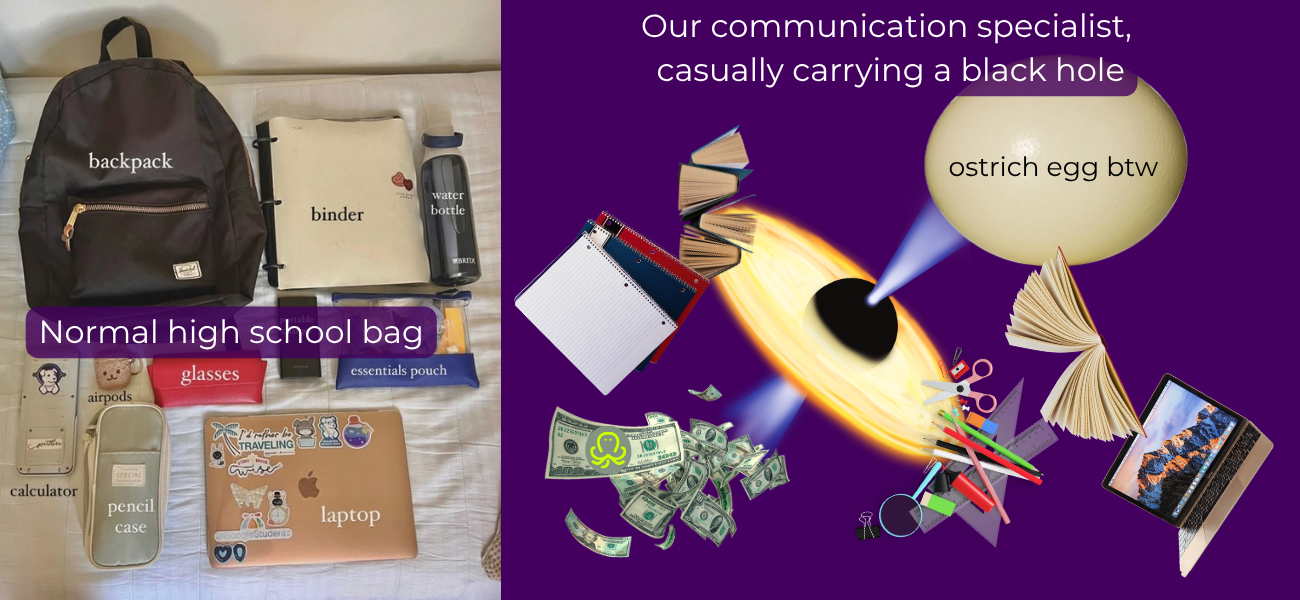
I remember carrying huge purses throughout my high school years, fitting at least 10 different notebooks and textbooks, a PC or iPad, workbooks, printouts, a ton of stationery, stray cash, food… Once, I even carried a real ostrich egg during my ornithology era (I was 13 and decided to show how strong the egg is by playing makeshift bowling, and broke it against the wall). Well, computers can’t replace food or ostrich eggs yet, but everything else does not need a black hole purse anymore. Today’s students also probably will never find out the irony of how the horse with osteochondrosis foreshadows the adult future. Or Mumu – depending on where you live, pardon my classic literature dark humor.
Eliminating conventional resource constraints and letting people study on their own, at their own pace, is indeed a revolution, especially for those who can’t attend face-to-face courses: working students, parents, international learners, and employees in three time zones who all need the same certification.
What some enthusiasts mistake is that access doesn’t equal learning, and it isn’t even the same as finishing. MOOCs have been fighting low completion rates for over a decade, and Celik and Cagiltay (2024) showed how much the number depends on how you count: completion rates based on what learners intended to finish came out much higher than the traditional enrolled-versus-completed figure, yet dropout remained a real problem. I suspect many corporate content libraries would tell a similar story if anyone published the data, and “how you count” is exactly where L&D dashboards love to hide.
The screen itself matters too. A 2024 meta-analysis by Salmerón et al. confirmed a small but significant “screen inferiority effect”: people understood texts slightly worse on handheld devices like tablets than on paper, echoing earlier findings for computers. I have said before that I memorize worse when typing, and apparently I am not special. Keep the digital library, but let people print the dense stuff.
Modern technology moves towards adaptability and personalization, and I am here for it. I do not like standardized education. We are all unique, and teaching needs to reflect that for us to grow, and to grow on our own path.
The research on AI in education is optimistic, with an asterisk. Alas, what doesn’t come with an asterisks in EdTech? A 2026 second-order meta-analysis by Ünal et al. pooled 19 meta-analyses with 58,702 participants and found a moderate effect of AI applications on student outcomes (ES = 0.67). The same authors note that the underlying meta-analyses suffer from inconsistent findings, heterogeneous methods, and variable quality. Given that technology in general landed near zero in higher ed, my inner PhD student wants to see how much of that gap survives a few more years of rigorous studies. I also suspect some sponsorship bias too.
For our great buddy, secretary and sometimes a lover (pls don’t do that, people!) ChatGPT specifically, Deng et al. (2025) synthesized 69 experimental studies from 2022 to 2024 and found improvements in academic performance, motivation, and higher-order thinking propensities, along with reduced mental effort. That last one is the double-edged sword, because effort is where a lot of learning happens and educators are already hyperaware of cognitive offloading.
Generative AI raised the stakes in both directions. In a randomized controlled trial in Harvard’s large introductory physics course, Kestin et al. (2025) had 194 students learn one topic from an AI tutor at home and another in an in-class active learning session led by experienced instructors. With the AI tutor, which was deliberately built on research-based teaching practices, students learned more than twice as much in less time. In interviews, Kestin has said the result is not an argument for replacing human interaction and suggested using the tutor to introduce topics before class.
Bastani et al. (2025) gave nearly a thousand students either a plain ChatGPT-style interface or a tutor designed with guardrails. During practice, grades jumped 48% with the plain version and 127% with the tutor. Once AI access was taken away, the plain-ChatGPT group scored 17% lower on the exam than students who never had AI at all, while the guardrailed tutor largely prevented that loss. Adults are not immune to cognitive-offloading, and we will get to knowledge workers in a minute.
While I think it’s a bit too early for AI tutors below senior high school, I am fairly certain that university students and adult learners can now learn without the traditional education trauma: excelling in their interests while facing less friction with the concepts they find hard. The condition is that the AI has to teach, not answer.
Learning analytics works on the same principle. When an LMS shows an instructor where a cohort stalls, or lets an L&D team skip modules a new hire has already mastered (sparing a senior engineer from “What is a password?”), personalization respects people’s time. It’s the same logic behind competency-based education, and that respect is what builds confidence and motivation.
A detached classroom is, in my humble opinion, an educator’s worst nightmare. And I am speaking from the point of view of a former detached kid who would rather stare at the same landscape outside the window over and over again. As an adult, I also think there is an educator and admin problem in this story.
Some instructors lose the motivation to pass on knowledge and nurture a cohort that will both become their peers and surpass them. For them, teaching is just work. Having seen educators who give beyond everything and educators who treat students as an assigned 9 to 5, I can tell you we know who’s who from the first class.
I also know educators can be severely underpaid. In universities, that’s the adjunct teaching four sections across two campuses. In companies, it’s the subject-matter expert who got “volunteered” to run onboarding on top of their actual job. As a fellow working human, I understand where the priorities lie when the income is not enough to survive, let alone survive with dignity. That’s an admin failure and, in public education, a government one too.
Admins can alleviate the burden with education technology and free up educators a bit, and the research is clear on why engagement is worth the effort. Kozanitis and Nenciovici (2023) meta-analyzed 104 studies of college courses in the humanities and social sciences (N = 15,896): assessment scores were 0.49 standard deviations higher under active instruction than under traditional lecturing, with bigger gains in classes of 20 or fewer and in upper-level courses. Active learning doesn’t require technology, and remember the clicker result above: the tool alone does nothing. But shared problem sets, live discussion boards, and simulations make it possible to give a 300-seat hall the kind of activity a 20-person seminar gets.
While I think learning is impossible without personal interest in the subject matter, I think some gamification is brilliant. I love simulations and interactivity, and I am an absolute sucker for points. Rain them on me, and you will never see a faster and more perfect completion. Another question is whether the knowledge will stay with me or be gone within a month.
Research shares my suspicion. Zeng et al. (2024) found a moderately positive effect of gamification on academic performance (g = 0.78), but across only 22 experimental studies, and a big effect from a small evidence base is exactly when I get suspicious. Points get me through the module. They do not guarantee I learned anything.

In an experiment with 355 employees completing virtual workplace training, Eger et al. (2025) varied how many game elements the training had. Low gamification intensity led to higher perceived autonomy and better performance than high intensity. The authors suggest that piling on game elements can overstimulate and overwhelm people. So yes, rain points on me, but maybe not a monsoon? There are even educational RPGs, and the same lesson applies to them: the game should foremost serve the task.
The downside of interactivity is that a modern screen offers more than one thing to interact with. Remember those flimsy 100 in 1 game consoles? Well, now we pretty much have a universe in 1. A 2024 meta-analysis by Chen et al. of 27 randomized experiments with 2,245 college-age participants found that mobile phone distractions like texting, chatting, and social media had a medium-sized negative effect on recall, and a large one on lecture recall specifically. The authors also note the evidence is still thin for adult professionals, which should worry anyone running hour-long virtual trainings where cameras are off and Slack is on (pssst, check out OctoProctor’s lightweight participation monitoring). I still wouldn’t ban devices outright, because some learners rely on them for accessibility. In courses that need laptops, give the laptop a job. In those that don’t, make the phone-free norm explicit.
“We’re just friends in school, I thought we’re not supposed to talk outside the classroom.”
That broke me back in the day, when I wanted to discuss summer reading with a high school peer I thought was a friend. Apparently, it was ok to visit each other and hang out all the time during term, but not outside of it. I never realized how many people share the experience of failing to maintain friendly or even working relationships outside of the classroom. Often, neurodivergent people are also blissfully unaware that we are part of the classroom inventory that gets slightly warmer treatment than the blackboard.
Discussion forums, shared documents, virtual classrooms, and video calls changed that. A group project can now include a student in Lagos, another in Lisbon, and a North American finishing a night shift, and the conversation does not end when the seminar room empties. A 2026 meta-analysis of 154 CSCL studies in Interactive Learning Environments found a moderate positive effect of computer-supported collaborative learning on objective cognitive outcomes (g = 0.42), with the size of the effect depending on which combinations of tool features and scaffolding were used. I think newer generations form stronger relationships that benefit them as they pursue education. Yes, maybe they do not go out as much, but it’s still more genuine than what opened this section.
There is a cost, and as a communication specialist, I would be a hypocrite not to mention it. Fauville et al. (2023), from Stanford’s Virtual Human Interaction Lab, found that people reported more Zoom fatigue when they video-conferenced more often, for longer, and with fewer breaks, and also when they experienced mirror anxiety from their own self-view, hyper-gaze from a grid of faces staring back, the feeling of being physically trapped, and the effort of producing and reading nonverbal cues. Women reported more fatigue because they experienced those mechanisms more intensely. Anyone who has survived a six-hour online onboarding will recognize all of it. Chiefs, please hear my plead! Camera-optional sessions, hidden self-view, audio-only check-ins, real breaks, and moving anything that can be asynchronous into shared docs.
Simulations, virtual labs, and scenario-based tasks let learners test theories and apply knowledge in situations that would be too expensive, dangerous (think flight simulators), or slow in real life. Nobody wants a first-year chemistry student learning about exothermic reactions the fun way, and nobody wants a new bank analyst learning about fraud on real client money.
But immersion is not the same as understanding. Coban, Bolat and Goksu (2022) pooled 48 experimental studies of immersive VR and found a small positive effect on learning overall (g = 0.38), smaller in higher education (g = 0.31), strong in architecture and engineering, and minimal or even negative in biology, anatomy, and dental education. Argh! Fixing Elsa’s rotten teeth wouldn’t set me up for the dentist school!
And in the Sailer review above, high-fidelity simulation training for advanced life support improved conceptual knowledge but not the ability to apply it. Before your department or L&D team spends the budget on goggles, ask whether presence is the learning goal or just the demo.
Generative AI adds a newer trap: outsourcing the thinking itself. Lee et al. (2025), from Microsoft Research and Carnegie Mellon, surveyed 319 knowledge workers who shared 936 real examples of using GenAI at work. The more confident people were in the AI, the less critical thinking they reported applying; the more confident they were in their own abilities, the more they applied. Critical thinking is shifting toward verifying outputs, integrating responses, and overseeing the task.
So what does thinking-friendly technology look like in practice? Make learners commit to an answer or a hypothesis before a simulation or an AI reveals anything. Configure AI tutors to give hints rather than solutions, the way the guardrailed tutor in the Bastani study did. Embed simulations in a program with a debrief instead of handing them out as standalone games. Grade the process as well as the product, through drafts, version histories, reasoning steps, and short oral defenses (which is also why going back on campus will not fix AI cheating on its own). And make verification an explicit step, because checking the machine is now part of the job.
A 2024 meta-analysis by Clinton-Lisell and Litzinger of 21 studies (1,712 participants) did find a small overall benefit of matching instruction to modality preferences (g = 0.31). However, only 26% of learning outcomes showed the crossover pattern the matching hypothesis actually requires, and the authors concluded it would be an overreach to insist learning styles be built into instruction. Learning style inventories still circulate in faculty workshops and corporate training alike, which is an expensive way to label people.
Multimodal learning still works, just for a different reason. Well-designed combinations of words and visuals help pretty much everyone, because the brain processes them through partly separate channels, which is the core of Richard Mayer’s multimedia learning research. The key words are “well-designed.” Mayer’s work also warns against redundancy, which is why reading your slides aloud word for word helps nobody – a major note to self, btw.
Captions turned out to be a more complicated story than I expected. For language learning, they clearly help: a 2023 meta-analysis of 26 classroom studies found a medium effect of subtitles on second-language learning. For learning content in a foreign language, though, Pannatier and Bétrancourt (2024) had 131 French-speaking students watch an English academic lecture (by Richard Mayer himself, the kind of academic in-joke I live for) with English subtitles, French subtitles, or none. Subtitles made no difference to learning or cognitive load. For a university with international cohorts or a company onboarding people across a dozen countries, captions are non-negotiable for deaf and hard-of-hearing learners and useful for language, but they don’t replace content designed for people learning in their second or third language.
Online quizzes, auto-graded assignments, and response systems made low-stakes testing cheap, and that is great news, because testing is one of the best learning tools we have. Glaser and Richter (2023) tested this in a real university lecture with 208 teacher-education students: short-answer practice questions with corrective feedback beat restudying the same content in every one of the five lecture topics, with a medium-to-large effect (d ≈ 0.56). Retrieving information is how you keep it (consider this my scientific defense of pop quizzes).
The “immediate” part is where I would unfortunately pump the brakes. A 2026 meta-analysis by Kandemir et al. of 51 studies (160 effect sizes) in computer-assisted learning found that feedback timing does not significantly influence learning outcomes on average (g = 0.03). The effect varied with educational level, subject, and time pressure, so timing isn’t irrelevant, just not the lever it is sold as. Instant feedback is convenient, just not magical.
What matters more is what the feedback says. In a network meta-analysis of computer-based feedback, Mertens, Finn and Lindner (2022) found that effectiveness grows with complexity: telling learners right or wrong works least well, showing the correct answer works better, and elaborated feedback that explains why works best. Anyone who has received a performance review that just said “meets expectations” knows exactly how little the first kind teaches.
Use frequent, low-stakes online assessments for learning, keep feedback focused on the task, and save the heavy integrity machinery for scores that carry consequences, like a final exam, a certification, a licensing test, or a pre-employment assessment. That is where proctoring belongs, and it should match the stakes, whether that means lightweight participation monitoring, auto proctoring, or AI proctoring with human review. How you score matters as much as how you protect, as I covered in scoring models for polytomous and dichotomous items.
My pet peeve when it comes to modern education is the lack of digital literacy. We don’t talk enough about digital hygiene, aptitude, media bias, and online fraud. Knowing how to enter a few words into Google and use MS Word is great, but it wouldn’t take one far.
If you think Millennials and Gen Z are covered because they grew up online or hold a degree, Oswald et al. (2026) would like a word. In a nationally representative sample of 2,666 German adults, participants misjudged roughly 3 in 10 untrustworthy websites as trustworthy before any training. A five-minute video teaching lateral reading, the fact-checker habit of leaving a site to check what others say about it, improved discernment by only 1–2 percentage points, and two weeks later the control group had caught up. Longer, structured training does better: a 2025 meta-analysis by Fendt, Muth and Edelsbrunner found a sizeable effect for lateral-reading interventions (g = 0.55). Annual security video doesn’t build digital literacy, compliance folks!
In the corporate world, the stakes are measured in money. In early 2024, a finance employee in the Hong Kong office of engineering firm Arup transferred about $25 million after a video call in which the “CFO” and other colleagues were deepfakes. He had initially suspected the email was phishing. Digital literacy is a security skill now, and as Lee et al. showed above, verification is quickly becoming the core of knowledge work with AI. It is also why impersonation checks in online exams are no longer paranoia, as I covered in how students try to cheat on proctored exams.
Working with digital resources should build information literacy, the ability to find, evaluate, and verify information, alongside digital citizenship: understanding privacy, managing one’s digital footprint, and behaving ethically online. For learners, that includes knowing what data their learning and proctoring tools collect, and why.
Assistive technology is where the impact of technology on students is least debatable. Text-to-speech, speech-to-text, screen readers, and captions let learners with disabilities access material that would otherwise stay locked behind a format. A 2023 review by Raffoul and Jaber found that text-to-speech is used mainly as a compensatory tool at the postsecondary level, where it helps students with learning disabilities improve reading speed, fluency, and content retention, and boosts their self-efficacy. It doesn’t do spectacular work out of the box, tho. Students and educators need training to use it well.
Learning management systems and specialized apps allow adjustable pacing, alternative assignment formats, extra resources, and extended time without a special negotiation every week. For adult learners, this matters as much as it does on campus. Neurodivergent employees and professionals with disabilities sit certification exams and compliance training too, and, as Gernsbacher points out, US law already requires captioning in most workplace and educational contexts.

The same principle applies to assessment. Tics, stimming, atypical gaze, and assistive tools should not read as “suspicious behavior” to an exam system. I went into accommodation workflows in detail in 8 questions to ask before adopting an AI proctoring platform. Accessibility has to be configured into exam settings before exam day, not negotiated in an appeal after it.
So, how does technology impact student learning? It amplifies whatever you point it at. Point it at retrieval, practice, collaboration, and accessibility, and the research says learners gain. Point it at content delivery, answer vending, or surveillance theater, and you get expensive dashboards, exhausted cohorts, and learners who look great until the AI is switched off.
For universities and corporate L&D teams alike, that means evaluating EdTech like researchers rather than shoppers. Ask vendors for independent evidence (be the 11%, not the 89%). Pilot with a comparison group. Measure learning, not logins. And make sure your assessment is credible, because online learning is only worth what its results can prove.
Computers still can’t replace ostrich eggs. They can remove a lot of the friction that made learning harder than it needed to be, as long as we don’t let them remove the thinking too.
Whether it’s a 300-student final or a certification for a global workforce, OctoProctor lets you match proctoring to the stakes, from lightweight participation monitoring to AI proctoring with human review, wherever your exam lives
Talk to us!On average, positively but modestly. Forty years of meta-analyses put the effect at around 0.35 standard deviations, and around 0.27 in university classrooms. The impact grows when technology supports thinking, practice, and feedback, and shrinks or turns negative when it replaces the learner’s effort or simply distracts.
Technology improves learning outcomes most reliably through practice testing, well-designed tutoring systems, simulations embedded in instruction, and collaborative tools. It hurts outcomes when learners multitask during lectures, read dense material on screens under time pressure, or use general-purpose AI as a crutch. The impact of technology on learning outcomes is a design question more than a hardware question.
Both ways. It widens access, supports disabled and international learners, and makes practice and collaboration easier. It also brings distraction, video-call fatigue, and the temptation to outsource thinking. Students who learn to verify information and use AI for hints rather than answers get most of the benefits with fewer of the costs.
Through interaction. Live polls, simulations, gamified practice, and collaborative spaces turn passive listening into active work, which research links to higher exam scores and lower failure rates. Points and badges help in the short term, but their motivational effect is less stable than their effect on knowledge, so they work best on top of solid instruction.
It supports every stage of the learning process: finding information, practicing with feedback, getting personalized explanations, collaborating with peers, and demonstrating mastery in assessments. The strongest gains come when technology keeps the learner doing the cognitive work instead of doing it for them.
Technology improves education when institutions pair it with evidence-based teaching: active learning, retrieval practice, accessible materials, and assessment that measures what matters. Without that pairing, the same tools mostly make existing teaching faster rather than better.
Beyond individual learning, technology helps education operate. It scales courses to people who can’t attend in person, frees educators from repetitive admin, shows institutions where cohorts struggle, and makes remote exams and certifications credible when paired with proportionate proctoring.
Make learners commit to a hypothesis before a tool reveals an answer, configure AI tutors to give hints instead of solutions, embed simulations in lessons with a debrief, require verification of AI outputs as an explicit step, and grade the reasoning process through drafts, version histories, or short oral defenses. If a tool does the thinking for learners, it erodes these skills. If it makes them think, it builds them.
Employees are students too, and the same rules apply. In workplace studies, simulation games embedded in training programs improved knowledge and retention, while standalone games did not. Knowledge workers who trust GenAI more tend to apply less critical thinking to its output, and digital literacy has become a security skill. The strongest corporate programs combine interactive practice, clear verification habits, and credible certification exams.


Technology in the classroom has transformed traditional learning environments, evolving from simple blackboards to sophisticated computer-based learning tools. But new never meant everyone embraces it immediately.